

7 Best Oils for Curly Hair Growth: A 2026 Guide
Table of Contents
- How to Choose Oils for Curly Hair Growth
- Castor Oil for Curly Hair: Why It Tops the List
-
Hair Oils for Dry Curly Hair: The Seven That Earn Their Place
- Jojoba Oil: The Closest Match to Scalp Sebum
- Coconut Oil: Penetration and Protein Protection
- Argan Oil: Lightweight Shine and Frizz Control
- Olive Oil: Deep Conditioning for Coarse, High-Porosity Hair
- Almond Oil: Gentle Softening for Sensitive Scalps
- Rosemary Oil: An Essential Oil for Scalp Support
- Carrot Oil: Antioxidant Conditioning for Dull Strands
- A Quick Word on Realistic Growth Claims
- How to Use Oil on Curly Hair Without Weighing It Down
- Curly Hair Length Retention: Sealing Moisture to Reduce Breakage
- Essential Oil Dilution, Patch Testing, and Safe Use
- Oil Buildup, Cleansing, and How to Measure Your Results
- Conclusion: Building a Routine That Fits Your Curls
- Frequently Asked Questions
Last Updated: October 12, 2026
How to Choose Oils for Curly Hair Growth
The right oil for curly hair growth matches your porosity, curl pattern, and scalp needs.
Curls lose moisture faster than straight hair. The tighter the coil, the harder it is for natural sebum to travel down the strand, leaving dry hair, frizz, and breakage.
Below, we break down how porosity and curl pattern change your choice, then rank seven oils worth trying.
Match the Oil to Your Porosity and Curl Pattern
Hair porosity describes how easily your strands absorb and hold moisture. Low-porosity curls have tightly closed cuticles and resist heavy products; high-porosity curls have raised cuticles, drink moisture quickly, and lose it just as fast. Fine curls prefer lightweight oils; coarse curls can carry richer ones.
Lightweight Oils vs. Heavy Oils: What Each One Does
Lightweight oils like jojoba and almond coat the hair shaft without weighing down fine curls. Heavy oils like castor and olive sit on the surface longer and seal in moisture for coarse or high-porosity hair. Neither is better, they solve different problems.
| Hair Type | Oil Weight | Best Use |
|---|---|---|
| Fine, low porosity | Lightweight | Leave-in sealing, shine |
| Medium, normal porosity | Light to medium | Pre-shampoo, scalp massage |
| Coarse, high porosity | Heavy | Deep sealing, length retention |
Castor Oil for Curly Hair: Why It Tops the List
Castor oil leads this list because it does more than coat the strand.

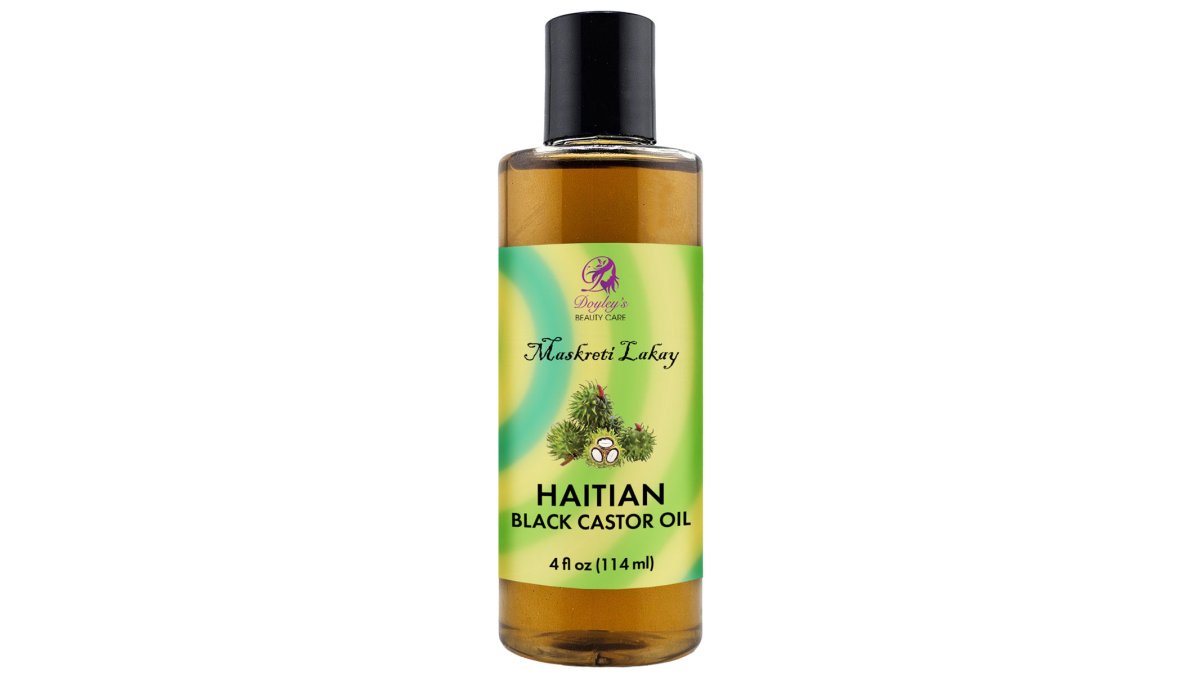
Our pick is Doyley's Haitian Black Castor Oil 4oz, an authentic oil extracted from castor beans indigenous to Haiti. It is known to strengthen the roots and help reduce breakage and split ends, supporting thicker, stronger-looking hair over time.
What Ricinoleic Acid and Omega-6 Fatty Acids Do for the Hair Shaft
Ricinoleic acid gives castor oil its thickness and grip on the hair shaft, while omega-6 fatty acids add conditioning that helps combat dry, flaky, itchy scalps.
Hair Oils for Dry Curly Hair: The Seven That Earn Their Place
Each of these seven oils solves a specific problem for dry curly hair, sealing, conditioning, or scalp support. Most curly routines work best with two or three, not all seven.
Jojoba Oil: The Closest Match to Scalp Sebum
Jojoba is technically a liquid wax ester, and its structure closely resembles the sebum your scalp produces naturally. That is why it absorbs without a heavy film and suits fine curls and greasy-prone scalps. It is a sealing oil, not a penetrating one, so it holds moisture in rather than adding it.
Coconut Oil: Penetration and Protein Protection
Coconut oil is widely used to help reduce protein loss during washing. That makes it useful for damaged or over-processed curls that feel mushy or stretchy when wet. The trade-off: it can leave coarse curls stiff or crunchy and may contribute to buildup. Use it as a pre-shampoo treatment rather than a leave-in.
Argan Oil: Lightweight Shine and Frizz Control
Argan oil is rich in vitamin E and fatty acids, and its light texture makes it a strong finishing oil for medium textures. It smooths the cuticle, adds shine, and tames frizz without greasy weight. It is not a deep conditioner, think of it as the last step that makes a style look polished.
Olive Oil: Deep Conditioning for Coarse, High-Porosity Hair
Olive oil is heavy, rich in conditioning fatty acids, and best used as a deep pre-shampoo treatment for coarse, high-porosity curls that can carry weight. It softens and adds slip, which helps with detangling. On fine or low-porosity hair, it sits on top and leaves a coated feel, so keep it away from the roots and use it sparingly.
Almond Oil: Gentle Softening for Sensitive Scalps
Almond oil is light, softening, and gentle enough for sensitive scalps. It is a good carrier oil for scalp massage blends because it spreads easily and does not feel greasy. It pairs especially well with castor oil, the almond lightens the castor's thick texture while the castor adds sealing power.
Rosemary Oil: An Essential Oil for Scalp Support
Rosemary oil is an essential oil, not a carrier oil, and it must be diluted before it touches your scalp. It is a common addition to scalp massage blends. Because it is potent, it belongs in a diluted blend, roughly one drop per teaspoon of carrier oil, and should be patch-tested first.
Carrot Oil: Antioxidant Conditioning for Dull Strands
Carrot oil adds a conditioning boost to dry, dull strands. It is a medium-weight oil that works well in pre-shampoo treatments or blended into a sealing oil for extra softness. It is not a primary sealer, but a useful supporting oil when hair looks tired and lacks luster.
| Oil | Weight | Best For | How to Use |
|---|---|---|---|
| Castor | Heavy | Sealing, scalp, edges | Scalp massage, edges |
| Jojoba | Light | Fine curls, oily scalps | Leave-in sealing |
| Coconut | Medium | Damaged, over-processed hair | Pre-shampoo |
| Argan | Light | Frizz, shine, medium textures | Finishing |
| Olive | Heavy | Coarse, high-porosity curls | Deep treatment |
| Almond | Light | Sensitive scalps, massage blends | Massage blends |
| Rosemary | Essential | Scalp support | Diluted only |
| Carrot | Medium | Dull, dry strands | Pre-shampoo, blends |
A Quick Word on Realistic Growth Claims
It is worth being clear about what oils can and cannot do, because this is where most curly hair growth advice overpromises. Oils support healthy-looking hair and scalp by sealing moisture, conditioning the strand, and helping reduce breakage, which supports length retention. They do not directly speed up the rate at which hair grows from the follicle.
How to Use Oil on Curly Hair Without Weighing It Down
Start with a pre-shampoo treatment: section dry hair, apply a heavy oil like castor or olive, and let it sit before washing. This protects strands during cleansing and adds conditioning.
Move to leave-in sealing after washing. Apply a lightweight oil over your leave-in conditioner while hair is still damp to seal in moisture. Our Mega Moisture Leave-In Conditioner Detangler pairs well here because it hydrates and detangles before you seal.
Finish with a scalp massage. Warm a small amount of oil between your palms and work it into the scalp with your fingertips for a few minutes.
Curly Hair Length Retention: Sealing Moisture to Reduce Breakage
Length retention is the real goal behind most curly hair growth searches.
That is why the order of your routine matters. Our Mega Moisture Deep Conditioner supports this step by delivering intense hydration and helping prevent breakage before you seal.
For structured styles, our Haitian Black Castor Oil Pomade coats the hair shaft to lock in moisture, hold styles, and reduce frizz.
A Practical Routine by Porosity and Curl Type
Most curly routines fail because they use the same oil, amount, and frequency for every head of hair.
Low porosity, fine curls. Your cuticles are tightly closed, so heavy oils sit on top and cause buildup.
Medium porosity, medium curls. You have the most flexibility.
High porosity, coarse curls. Your cuticles are raised and lose moisture quickly, so you need a heavier sealer.
How to Measure Whether It Is Working
Growth is slow, so track the signals you can actually see rather than waiting for a length change. Over four to eight weeks, watch for:
- Less shedding during detangling. Count the strands you remove on wash day and compare week to week.
- Fewer fairy knots and split ends. Smoother ends suggest the sealing step is working.
- Better wet-to-dry feel. Hair that feels soft when dry, not brittle or straw-like, is holding moisture.
Take a wash-day photo every few weeks in the same lighting and compare. Length retention shows up as ends that stay thick rather than tapering to thin, fragile points.
When to See a Professional
Oils support healthy-looking hair and scalp, but they are not a fix for every concern. If you notice sudden, patchy, or persistent shedding, a widening part, or scalp pain, burning, or open sores, see a dermatologist or healthcare provider rather than adding another oil to your routine. Sudden shedding can have causes an oil-based routine cannot address, and getting an assessment early is the practical move.
Essential Oil Dilution, Patch Testing, and Safe Use
Essential oils are potent and should never be applied directly to the scalp. A safe working ratio is roughly one drop of essential oil to a teaspoon of carrier oil, and even that should be patch-tested first.
A patch test takes a day.
Rosemary and lavender are the two most common essential oils in curly hair routines. Both need dilution and should be avoided on broken or irritated skin.
Oil Buildup, Cleansing, and How to Measure Your Results
Buildup is the most common complaint about oil routines, and it comes from over-application and under-cleansing.
Use a clarifying wash every few weeks, or a gentle sulfate-free shampoo more often if you oil daily.
Measuring results keeps you honest. Take a photo of your hair on wash day, note how it feels wet and dry, and track how much hair you lose during detangling.
Conclusion: Building a Routine That Fits Your Curls
The hardest part of any curly hair routine is consistency when results take time. Oils support healthy-looking hair and scalp, but they work gradually, through moisture, conditioning, and reduced breakage.
We built Doyley's Beauty Care around authentic Haitian Black Castor Oil for exactly that reason. Our Haitian Black Castor Oil is rich in ricinoleic acid and omega-6 fatty acids, known to strengthen roots, reduce breakage, and combat dry, flaky, itchy scalps. Pair it with our Premium Haitian and Jamaican Black Castor Oil 1:1 Blend for a thicker, ash-rich option that is hexane-free.


Start with one oil, one routine, and one month of consistency. Get started with Doyley's Beauty Care and give your curls the moisture and conditioning they need to look fuller and healthier over time.
Frequently Asked Questions
What oils help grow curly hair?
No oil grows hair on its own, but some support the conditions that help curls retain length. Castor oil, jojoba, coconut, argan, olive, almond, and carrot oil each moisturize the hair shaft and scalp differently. The goal is less breakage and better moisture retention, which helps hair look fuller and healthier over time. Our Haitian Black Castor Oil is rich in ricinoleic acid and omega-6 fatty acids, which support moisture on dry, flaky, itchy scalps.
How often should you oil curly hair?
Most curly and coily textures do well with oil two to three times a week, plus a pre-shampoo treatment on wash day. Fine curls should start with once or twice a week to avoid weighing down the hair shaft. Coarse curls can handle more. Watch how your hair responds after two weeks and adjust. If your curls look flat or greasy, space out applications or switch to a lighter carrier oil.
Should you apply hair oil to your scalp or your ends?
Both, but the technique differs. Apply oil to the scalp with fingertips and a gentle scalp massage to support scalp health and loosen buildup. Apply oil to the ends to seal in moisture, since ends are the oldest, driest part of the hair shaft and where breakage usually starts. Avoid dumping oil mid-shaft on fine curls, as this flattens curl definition.
Can hair oil help prevent breakage in curly hair?
Oil can reduce breakage by coating the hair shaft, which lowers friction between strands and helps seal in moisture so hair stays flexible instead of snapping. Dry, brittle hair breaks more easily, so regular conditioning and sealing matter. Our Mega Moisture Deep Conditioner and Leave-In Detangler both use Haitian Black Castor Oil to hydrate, soften, and help prevent breakage and split ends.
How do you use oil on curly hair without making it greasy?
Start with a small amount, about three to five drops, and rub it between your palms before applying. Focus on the ends and scalp rather than the mid-lengths. Apply to damp hair after a leave-in conditioner so the oil seals water in rather than sitting on top of dry strands. Lightweight oils like jojoba work better for fine curls, while heavier castor oil blends suit coarse textures.