

Amalise vs Jamaican Black Castor Oil: Which Wins in 2026?
Table of Contents
- Amalise vs Jamaican Black Castor Oil: Quick Comparison
- What Is Amalise Castor Oil?
- What Is Jamaican Black Castor Oil?
- Cold Pressed vs Black Castor Oil: Extraction and Ash Content
- How to Use Black Castor Oil for Hair Growth
- Castor Oil Hair Growth Results: What to Expect
- Choosing the Right Castor Oil for Your Hair Type and Porosity
- Frequently Asked Questions
Last Updated: September 28, 2026
Amalise vs Jamaican Black Castor Oil: Quick Comparison
Comparing amalise vs jamaican black castor oil? Jamaican black castor oil is the heavier, ash-rich option for thick coils and stubborn edges; the lighter, Haitian-style oil Amalise markets spreads more easily on fine or wavy hair. Most people don't need to pick a side. This guide from Doyley's Beauty Care breaks down where each wins, where each falls short, and how to match the oil to your hair type instead of the label.

Most comparison posts skip this: both oils often start from the same plant. The difference comes down to roasting, ash content, and how thick the finished oil feels.
| Feature | Amalise Castor Oil | Jamaican Black Castor Oil |
|---|---|---|
| Extraction style | Cold-pressed, lighter processing | Roasted seeds, traditional boil |
| Ash content | Low | High |
| Color and texture | Golden, thin | Dark, thick |
| Best for | Fine to medium hair, daily use | Coils, edges, protective styles |
| Absorption | Fast | Slower, sits on top longer |
What Is Amalise Castor Oil?
Amalise castor oil is a cold-pressed oil marketed as a lighter, cleaner-feeling alternative to traditional black castor oil. Because the seeds aren't roasted, it stays golden and thin, spreading easily through fine strands.

That lighter body has trade-offs. Cold pressing preserves more natural fatty acids, including ricinoleic acid, which gives castor oil its emollient, moisture-retention properties. What it doesn't deliver is ash, which comes from the roasted seed husk, a step cold pressing skips entirely.
For low-porosity hair or a sensitive scalp, that thinner texture is the point: it coats the shaft without smothering it and rinses out with less clarifying shampoo than a heavy black oil.
Where it falls short: on coarse, tightly coiled hair, a thin oil can disappear into the strands without leaving enough of a seal. If your hair drinks oil and still feels dry two hours later, cold-pressed alone probably won't cut it.
What Is Jamaican Black Castor Oil?
Jamaican black castor oil is made the traditional way: seeds are roasted, ground, boiled, and skimmed, leaving a dark, thick oil with higher ash content. That alkaline ash is the biggest difference from a cold-pressed version.
The alkalinity matters for cuticle health: a slightly alkaline oil helps lift and open the cuticle, which is why black castor oil feels like it "gets in" rather than sitting on top. The flip side is real, on fine hair, that heaviness can flatten roots and leave a greasy film if you overdo it.
Ricinoleic acid is still the headline active, making up the bulk of the fatty acid profile. Roasting doesn't remove it; it just changes the oil around it, producing a denser oil with stronger emollient behavior and longer wear between washes.
Cold Pressed vs Black Castor Oil: Extraction and Ash Content
The cold pressed vs black castor oil question comes down to one variable: heat. Cold-pressed oil skips roasting, so it stays light and golden. Black castor oil is made from toasted seeds, boiled and skimmed, producing a darker oil with measurable ash content.
Here's what the ash does. Ash is the mineral residue left after the seed husk burns off during roasting, and it makes the finished oil more alkaline. That higher pH nudges the hair cuticle, the outermost layer of the shaft, open slightly, so it accepts moisture and oil more readily. That's why black castor oil has a reputation for deep conditioning on coarse textures.
The pH mechanism most articles skip. Castor oil itself sits close to neutral, but ash residue from roasted husks pushes black castor oil into a mildly alkaline range. Hair's cuticle layers lie flat and overlap in their natural, slightly acidic state; an alkaline substance lifts those scales. That lift is temporary and reversible, not damage, but it changes how the oil behaves. A lifted cuticle lets oil and water slip underneath, which is why black castor oil feels like it penetrates rather than coats.
Doyley's Premium Haitian and Jamaican →
FDA guidance on cosmetic labeling and ingredient claims
How to Use Black Castor Oil for Hair Growth
Learning how to use black castor oil for hair growth is less about frequency and more about application. Most people over-apply, clogging the scalp and defeating the purpose. A little goes further than the bottle suggests.
- Start with a clean, dry scalp. Buildup blocks absorption.
- Warm a small amount between your palms to thin the oil.
- Part your hair in sections and apply directly to the scalp, not the lengths.
- Massage for two to three minutes to stimulate blood flow to the follicles.
- Work any remaining oil through your ends to seal in moisture.
- Leave it on for at least an hour, or overnight with a satin cap.
- Wash out with a gentle, sulfate-free cleanser.
Castor Oil Hair Growth Results: What to Expect
Castor oil hair growth results depend on consistency more than any product choice. Hair grows in cycles, and no topical oil shortens that cycle. A good oil reduces breakage so the length you grow actually stays on your head.
Realistic expectations look like this:
- First two weeks: Softer scalp, less flaking, easier detangling.
- One to two months: Less breakage at the ends, stronger-feeling hair.
- Three to six months: Visible length retention, especially at the edges.
- Six months plus: Thicker-looking hair overall, assuming you're consistent.
Choosing the Right Castor Oil for Your Hair Type and Porosity
Hair porosity should decide your pick, not marketing. High-porosity hair has gaps in the cuticle and loses moisture fast, so it benefits from a heavier, ash-rich oil. Low-porosity hair has a tightly closed cuticle that resists absorption, so it does better with a lighter, cold-pressed oil. Here's the framework most comparison posts never give you.
- Single-ingredient labels. Authentic castor oil lists one ingredient: castor oil (or Ricinus communis seed oil). If the label lists multiple oils, you're buying a blend, not a pure product.
- Cold-pressed or hexane-free claims. Hexane is a solvent used in some large-scale extraction. If a brand says hexane-free, that's a meaningful disclosure. If it says nothing about extraction method, ask.
- Color and scent consistency. Cold-pressed oil is golden and nearly odorless. Black castor oil is dark with a distinct roasted, slightly smoky scent. If a "black" castor oil is pale or odorless, it's likely been diluted or artificially colored.
- Small-batch sourcing language. Brands that name the region or country of origin and describe their production method are generally more transparent than brands that only say "imported."
- Price sanity check. Authentic small-batch castor oil costs more to produce than a mass-market blend. A price that seems too low for the bottle size is a signal worth investigating.
NIH overview of ricinoleic acid and castor oil properties
Frequently Asked Questions
What is the difference between Amalise castor oil and Jamaican black castor oil?
Amalise castor oil is typically cold-pressed, meaning the beans are pressed without heat, resulting in a lighter color, thinner consistency, and lower ash content. Jamaican black castor oil is made by roasting, grinding, and boiling the beans, which produces a darker, thicker oil with higher ash content. The ash makes it more alkaline, which can help lift the hair cuticle for deeper penetration but may feel heavier on fine hair. Your choice depends on your hair porosity and how much weight you want.
Is Haitian black castor oil better than Jamaican black castor oil?
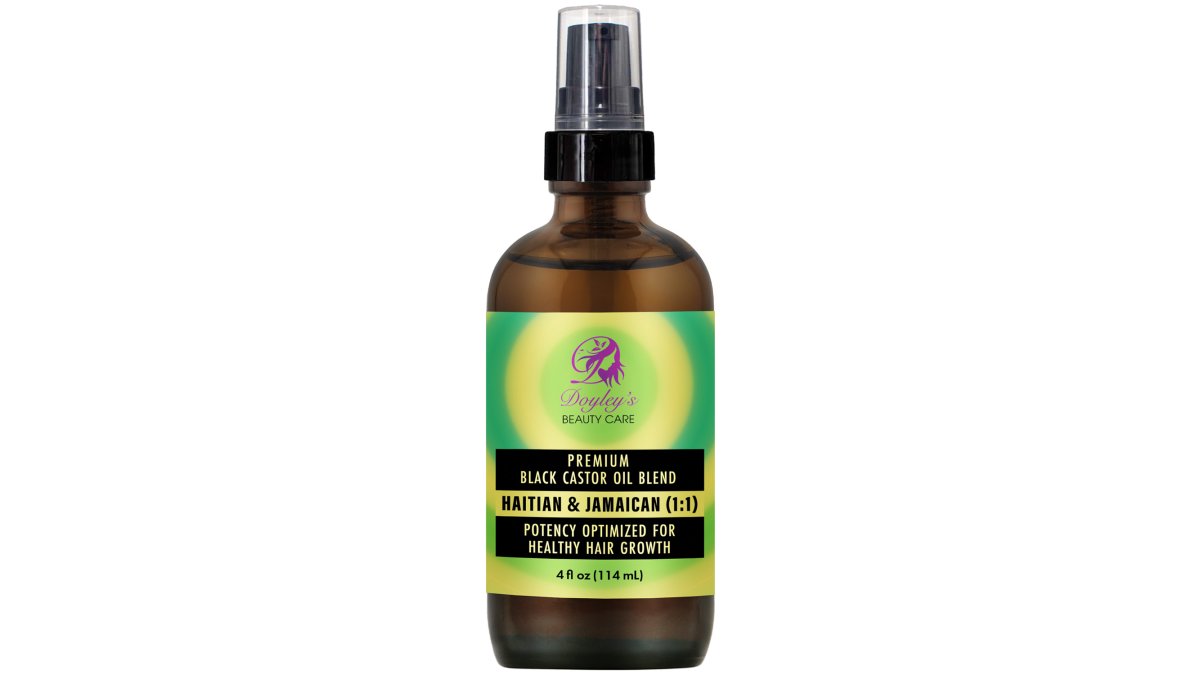
Neither is universally better; they suit different needs. Haitian black castor oil, known as Lwil Maskriti, is traditionally lighter in color and texture, making it easier to spread and less likely to weigh down fine or low-porosity hair. Jamaican black castor oil is thicker with higher ash content, which some people prefer for sealing moisture on coily hair or soothing a dry, flaky scalp. Many users get the best of both by blending them, like Doyley's Premium Haitian and Jamaican Black Castor Oil 1:1 Blend.
How do I choose the best castor oil for my hair type?
Start with your hair porosity. Low-porosity hair repels heavy oils, so a cold-pressed or Haitian variety is a better fit. High-porosity hair absorbs quickly and benefits from the thicker, ash-rich Jamaican black castor oil. Fine hair usually does well with lighter oils applied sparingly to the scalp, while thick, coily hair can handle heavier applications along the hair shaft. Always check the label for hexane-free extraction.
How long does it take to see castor oil hair growth results?
Most people notice less breakage and a healthier scalp within 4 to 6 weeks of consistent use, but visible length gains typically take 3 to 6 months because hair grows about half an inch per month. Castor oil supports the hair growth cycle by stimulating follicles and improving moisture retention, but it cannot speed up genetics. Take monthly photos and track shedding to measure progress objectively. If you see no change after three months of regular use, reassess your application method or hair porosity compatibility.
Can I use black castor oil on my skin and hair?
Yes, black castor oil is a multi-purpose emollient. On hair, it moisturizes the scalp, strengthens roots, and reduces split ends. On skin, it deeply hydrates and can soothe acne and dryness. You can also apply it to nails and cuticles to prevent breakage. A little goes a long way, so start with a thin layer.