

Haitian Castor Oil for Dandruff: Does It Actually Work?
Table of Contents
- What Is Haitian Black Castor Oil?
- Can Castor Oil for Dandruff Actually Help?
- How to Apply Castor Oil to Scalp Without Buildup
- How to Use Haitian Black Castor Oil for Hair Growth
- Haitian vs Jamaican Black Castor Oil
- Mixing Castor Oil With Other Scalp Treatments
- Potential Side Effects and Risks
- Frequently Asked Questions
Last Updated: September 16, 2026
What Is Haitian Black Castor Oil?
Haitian black castor oil is a thick, dark oil pressed from castor beans grown in Haiti, traditionally roasted and ground before extraction rather than chemically processed. That roasting gives it its color, smoky scent, and high viscosity compared with standard castor oil.

Can Castor Oil for Dandruff Actually Help?
Castor oil for dandruff helps with the dry, flaky, itchy scalp that comes from moisture loss, but it does not cure dandruff caused by fungal overgrowth. That distinction decides whether the oil works for you or makes things worse.
Dry Scalp vs. Fungal Dandruff: Why the Difference Matters
Dry scalp is a moisture problem: flakes are small, white, and dry, often alongside dry skin elsewhere. Seborrheic dermatitis, the clinical name for most true dandruff, is an inflammatory response to malassezia, with larger, yellower, greasier flakes plus redness and itching that moisturizing alone won't fix.
- Flakes brush off easily and feel dry → likely dry scalp, oil may help
- Flakes cling to the scalp, look yellow, and itch persistently → likely fungal, see a dermatologist
- Flaking improves in humid weather and worsens in winter → leans toward dry scalp
- Flaking is constant year-round with redness → leans toward seborrheic dermatitis
How to Apply Castor Oil to Scalp Without Buildup
The biggest mistake is applying castor oil to a dry, unwashed scalp and leaving it there. Thick oil sitting on the scalp can clog pores and trap dead skin, producing the exact buildup people blame the oil for.
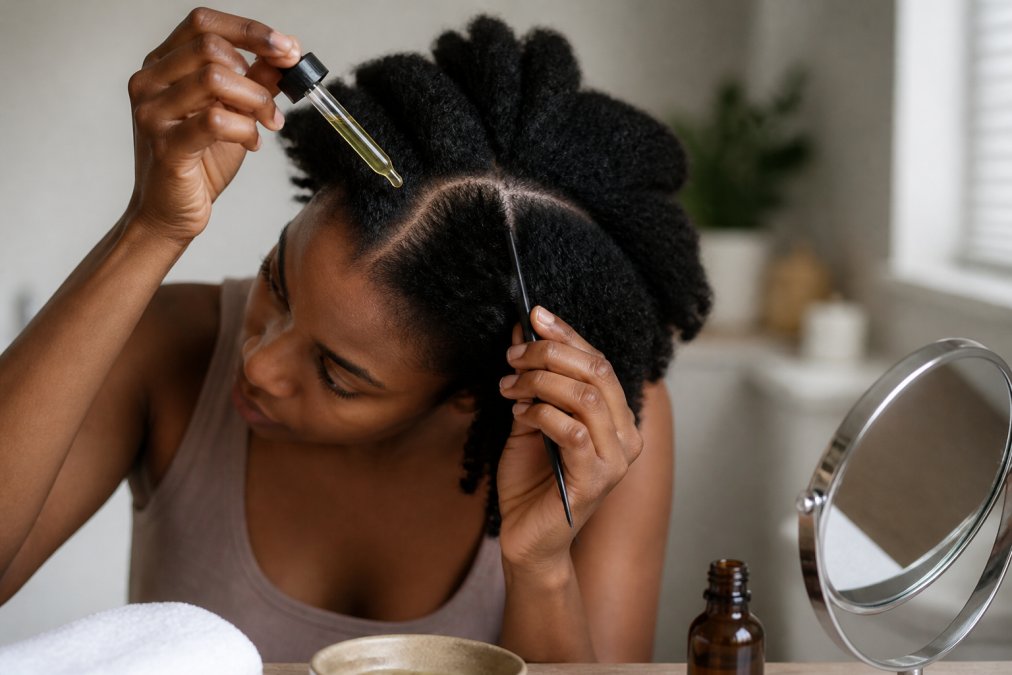
Follow this sequence:
- Start on clean, damp hair. Wash first, then towel-dry to damp; oil spreads further and absorbs better.
- Part in sections. Comb four to six clean parts so you reach the scalp, not just the hair.
- Dilute the oil. Mix one part castor oil with two to three parts lighter carrier oil such as jojoba or coconut. Undiluted castor oil is too heavy for most textures.
- Apply with a dropper, not your palms. Two to three drops per section, directly on the scalp.
- Massage for three to five minutes to move the oil along the scalp and support circulation.
- Leave it on for 30 minutes to overnight, then wash out thoroughly with a sulfate-free shampoo. Do not leave it in for days.
Dilution Ratios by Hair Texture
Most guides say "dilute" without saying how much, which is why fine hair ends up greasy and coarse hair never gets oil to the scalp. The ratio should change with strand thickness:
| Hair texture | Castor oil | Carrier oil | Total per treatment |
|---|---|---|---|
| Fine or thin | 1 part | 4 parts | About 1 teaspoon total |
| Medium | 1 part | 3 parts | About 1.5 teaspoons total |
| Coarse, coily, or type 4 | 1 part | 2 parts | About 2 teaspoons total |
| Transitioning or heavily porous | 1 part | 2 parts | About 2 teaspoons total |
30-Minute Treatment vs. Overnight: Which to Choose
For most people, contact time matters more than the amount of oil. The right choice depends on what you're treating.
- 30-minute treatment: Best for dry scalp, light flaking, or fine hair. Apply, massage, cover with a shower cap to hold warmth, and wash out within the hour, enough time for the occlusive layer to slow water loss without trapping debris.
- Overnight treatment: Better for coarse or tightly coiled hair where oil needs hours to work down the strand, and for very dry scalps. Use a satin-lined cap or thin towel over your pillowcase and wash out in the morning. Do not sleep in it more than one night.
- Skip both if you have active fungal dandruff. Extended contact gives malassezia more to feed on. If flakes are yellow, greasy, and cling to the scalp, treat the fungal issue first and revisit oil later.
How Often to Repeat
Twice a week is the practical ceiling for most people. Once a week is enough if your scalp is only mildly dry, and daily application is unnecessary for anyone.
Application Frequency and Duration
Twice a week is the practical ceiling for most people. Once a week is enough if your scalp is only mildly dry, and daily application is unnecessary for anyone.
How to Use Haitian Black Castor Oil for Hair Growth
Hair growth claims need a caveat: castor oil does not create new follicles or speed up growth directly. It can reduce breakage, and less breakage means more length retained over time.
For growth-focused use:
Doyley's Haitian Black Castor Oil →
- Apply to the scalp and massage for five minutes, two to three times weekly
- Pay attention to the hairline and crown, where breakage shows first
- Pair it with a deep conditioner rather than relying on oil alone
- Track with photos every four weeks, not with daily mirror checks
Haitian vs Jamaican Black Castor Oil
Both oils come from the same plant and share the same core fatty acid profile. The difference is processing and provenance, not chemistry, which matters, because most comparison content treats them as interchangeable, then recommends one for scalp care and the other for growth without explaining why.
| Factor | Haitian Black Castor Oil | Jamaican Black Castor Oil |
|---|---|---|
| Roasting level | Light roast, gentler scent | Heavier roast, stronger smoky scent |
| Color | Amber to dark brown | Darker, often near-black |
| Ash content | Lower | Higher, from roasting method |
| Texture | Thick and sticky | Slightly thinner in many versions |
| Common use | Scalp and skin care | Hair growth routines |
Which One Should You Actually Buy for a Flaky Scalp?
For dandruff or dry-scalp relief, roast level is the deciding factor, not country of origin. The practical breakdown:
- Choose Haitian black castor oil if: your scalp is dry, sensitive, or irritated and you want oil to sit for 30 minutes or overnight without stinging or drying it further. The lighter roast keeps more of the natural fatty acid profile intact and produces less of the smoky, astringent quality that can aggravate an inflamed scalp.
- Choose Jamaican black castor oil if: your scalp isn't the problem and you're chasing length retention on the hair shaft. The heavier roast and higher ash content are traditional in growth routines, and the thinner texture spreads more easily through dense hair.
- Skip both if: flakes are yellow, greasy, and cling to the scalp. That points to seborrheic dermatitis, and any oil on top can feed the yeast involved. Treat the fungal issue with a medicated shampoo first.
Does the Difference Show Up in Results?
For scalp hydration, most users won't notice a meaningful difference between a well-made Haitian and Jamaican oil over four to six weeks. What actually changes your outcome is dilution ratio, contact time, and whether you're treating dry scalp or fungal dandruff. Roast level is secondary, mostly affecting feel and scent.
A Note on Labeling
"Haitian black castor oil" and "Jamaican black castor oil" are not regulated terms the way organic certification is. A bottle can carry either name without proving where the beans were grown or how they were roasted. Look for a brand that states bean origin and extraction method on the label, and be skeptical of very low prices on a product claiming a traditional roast-and-press process.
Mixing Castor Oil With Other Scalp Treatments
Castor oil layers well with some treatments and badly with others, and getting this wrong is where most routines stall.
Potential Side Effects and Risks
Castor oil is generally well tolerated but not risk-free, and the reactions people report are predictable.
- Contact dermatitis. Some people react to castor oil itself with redness and itching (Angioedema-like allergic contact dermatitis to castor oil). Patch test on your inner forearm for 24 hours first.
- Pore clogging. Castor oil is comedogenic for some skin types. If you're prone to scalp acne or folliculitis, dilute heavily or skip it.
- Buildup and matting. Thick oil left on fine hair can cause tangling and matting, especially at the roots.
- Interaction with medicated treatments. Oil blocks the contact antifungal shampoos need.
- Fine and thin hair textures. The risk most guides skip: undiluted castor oil weighs fine hair down and makes it look flat. Dilute at one part oil to three or four parts carrier, or use a pomade instead, which coats the shaft without saturating the scalp.
Frequently Asked Questions
Does castor oil fight dandruff?
It can help with dry, flaky scalp, which is one cause of dandruff. Doyley's Haitian Black Castor Oil is rich in ricinoleic acid and omega-6 fatty acids, which moisturize the scalp and help combat dry, flaky, itchy skin. However, castor oil alone will not kill malassezia, the yeast behind true fungal dandruff. If your flakes are greasy, yellowish, or paired with redness, pair castor oil with an antifungal treatment and see a dermatologist.
What is Haitian castor oil good for?
Haitian black castor oil is used for scalp hydration, strengthening hair roots, and reducing breakage and split ends. Doyley's Haitian Black Castor Oil is known to stimulate hair follicles and promote thicker, stronger hair, while its moisturizing properties help with dry, flaky, itchy scalps. It also works as an all-purpose skin oil for dryness and can be applied to nails and cuticles to prevent breakage.
How often should you apply castor oil to your scalp?
For dandruff-prone scalps, start with once or twice a week. Apply to a clean scalp, massage gently, and leave it on for 30 minutes to a few hours before washing out with a gentle cleanser. If your scalp tolerates it well and does not feel clogged, you can increase to two or three times a week. Daily use is not necessary and can lead to buildup on fine hair.
Which is better, Jamaican or Haitian castor oil?
Both come from the same castor bean plant and share ricinoleic acid as the main active compound. The difference is in processing and provenance. For dandruff and scalp hydration, Haitian castor oil is often considered a gentler choice due to its traditional processing.
Will castor oil clog my pores or weigh down fine hair?
Castor oil is thick, so it can clog pores or weigh down fine hair if you use too much or leave it on too long. Use a small amount, focus on the scalp rather than the full length, and always wash it out. For fine or thin hair, dilute castor oil with a lighter carrier oil like coconut or jojoba, or use a pomade formula that spreads more easily without saturating the strands.