

How Long for Castor Oil Results: A Realistic Timeline
Table of Contents
- What Determines How Long Castor Oil Results Take
- Castor Oil Hair Growth Timeline: What to Expect Week by Week
- How to Apply Castor Oil for Hair (and Lashes) the Right Way
- Application Frequency and Consistency: The Real Dealbreaker
- Risks, Side Effects, and Removal Hygiene
- Why Your Results Stalled: Troubleshooting Checklist
- Frequently Asked Questions
Last Updated: September 13, 2026
What Determines How Long Castor Oil Results Take
Castor oil results are not instant, the timeline depends on your hair's growth cycle, oil quality, and consistency. Most people notice subtle softness within four weeks, with visible density and fullness at three to six months (the American Academy of Dermatology).
This guide from Doyley's Beauty Care breaks down a realistic timeline for how long castor oil results take, plus application methods and troubleshooting steps.
Here's the part most guides skip: castor oil does not grow hair overnight, and anyone promising that is selling you something. What it does is support the conditions your follicles need to do their job. According to the American Academy of Dermatology's guidance on hair loss, hair grows in cycles, and no topical product can shortcut biology.
Your Hair's Growth Cycle Sets the Pace
Hair grows in three phases: anagen (active growth), catagen (transition), and telogen (rest) (peer-reviewed research). Only anagen produces visible length, years on the scalp, weeks on the lashes.
That biological clock is why castor oil results follow a slow curve. You cannot compress the anagen phase, but a healthy scalp with good circulation and moisture helps follicles stay in it longer.
Oil Quality, Texture, and Starting Point
Not all castor oil is equal. Cold-pressed, hexane-free Haitian Black Castor Oil retains more ricinoleic acid, the fatty acid behind its moisturizing properties. Mass-market oils cut with solvents or cheap carriers deliver less.

Your starting point matters too. Someone with heat-damage breakage sees faster cosmetic improvement than someone addressing long-term thinning, and fine hair absorbs oil differently than coily textures, so technique matters as much as the product.
Castor Oil Hair Growth Timeline: What to Expect Week by Week
The castor oil hair growth timeline is gradual, and tracking it honestly prevents frustration. Here is what most people observe at each stage with consistent application.
| Timeframe | What You'll Notice | What's Happening |
|---|---|---|
| Weeks 1-4 | Softer hair, less flaking, easier detangling | Moisture and scalp conditioning |
| Months 2-3 | Subtle changes: less breakage, fuller edges | Hair shaft strengthening, reduced shedding |
| Months 4-6 | Visible improvement in density and length | New growth reaching noticeable length |
The First 4 Weeks
Week one is about moisture, not growth: softer hair, less frayed split ends, and a calmer itchy scalp, thanks to ricinoleic acid's moisturizing properties.
Do not expect length yet. Any "growth" in month one is usually reduced breakage making hair appear longer, not new growth from the follicle.
Months 2 to 3: Subtle Changes
This is where consistency pays off: less shedding, stronger roots, fewer split ends. On lashes, you may see a slightly fuller lash line.
These are subtle changes, easy to miss if you are checking daily. Take a photo on day one and compare monthly.
Months 4 to 6: Visible Improvement
By month four to six, visible improvement is hard to deny: new growth along the hairline, thicker edges, and increased density. Eyelash growth typically shows here too.
How to Apply Castor Oil for Hair (and Lashes) the Right Way
Applying castor oil correctly matters more than how often you buy it. The goal is to reach the scalp and hair shaft without suffocating follicles or weighing down fine hair. The routines below include a removal protocol.
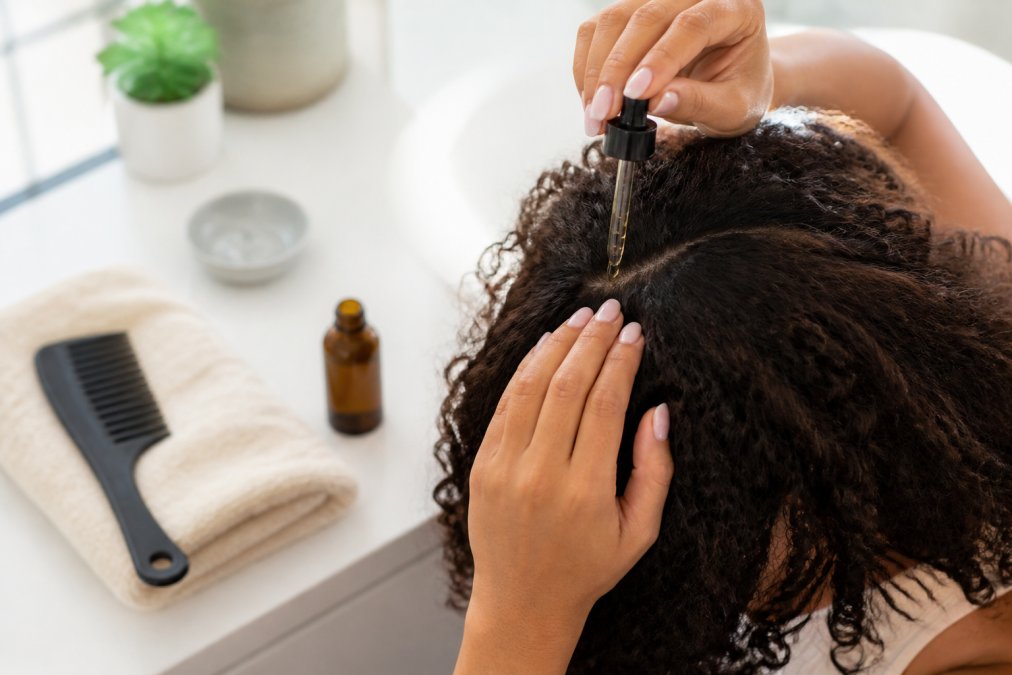
The Core Method (Works for Every Hair Type)
- Start with clean, damp hair. Oil on a dirty scalp traps buildup.
- Part hair into sections and apply oil directly to the scalp with a dropper or fingertips.
- Massage for 3-5 minutes to stimulate circulation.
- Work a small amount through mid-lengths and ends to reduce breakage and split ends.
- Leave in for 30 minutes to overnight, then shampoo out.
For lashes, use a clean spoolie or lash serum wand. Apply a thin line along the upper lash root, not the tips, one pass is enough. Do this at night so it doesn't migrate into your eyes.
Hair-Type-Specific Routines
Generic advice is why so many people quit. The right routine depends on texture and porosity.
Straight, fine, or low-porosity hair. Oil sits on top and looks greasy fast. Use a dime-sized amount for the whole scalp, diluted 1:1 with jojoba or argan. Apply to the scalp only, keep mid-lengths and ends dry, and limit treatments to 30 minutes. A Haitian-Jamaican blend is lighter than pure Jamaican black castor oil and works well here.
Wavy hair. Apply to the scalp and massage in, then run a small amount through the ends only. A 1-2 hour pre-wash treatment is usually enough; overnight is optional if your scalp tolerates it.
Curly hair. Curls are drier and handle more oil. Section into four to six parts, apply to scalp and work through the length, cover with a plastic cap, and leave overnight once a week. Follow with a co-wash or gentle shampoo.
Coily and thick textures. These absorb the most oil and benefit from overnight treatments two to three times per week. Use a generous amount on scalp and ends, and detangle with a wide-tooth comb while the oil is in.
Removal and Hygiene Protocol
This step helps prevent itching, clogged pores, and eye irritation.
- Shampoo out thoroughly. One wash is rarely enough for an overnight treatment. Lather, rinse, and repeat if your hair still feels coated. A gentle sulfate-free shampoo is fine for most people; if you use heavy oils regularly, a clarifying shampoo once every week or two prevents buildup that mimics dandruff.
- Clean your applicators. Droppers, spoolies, and fingertips carry bacteria. Rinse the dropper tip with hot water after each use, and replace lash spoolies weekly or wash them with mild soap and let them dry completely.
- Don't leave oil on for days. Leaving it in longer than overnight traps dirt and dead skin against the scalp. If you notice itching, flaking, or a smell, wash it out and take a break.
- Protect your eyes. For lash application, close the eye and apply along the root line only. If oil migrates into the eye, rinse with cool water. Stop lash use if irritation persists.
- Patch test first. Apply a small amount to your inner wrist or behind your ear 24 hours before first use, especially if you have sensitive skin or a history of reactions.
Application Frequency and Consistency: The Real Dealbreaker
Consistency beats intensity. Applying castor oil two to three times per week for six months outperforms a daily routine you abandon after two weeks.
The difference between people who see castor oil results and those who don't is regular use over months, not weeks. Set a schedule you can keep:
- Scalp treatments: 2-3 times per week
- Lash application: nightly, before bed
- Deep overnight treatment: once per week
If your scalp is sensitive, start with once a week and build up. A patch test on your inner wrist 24 hours before first use is a simple safeguard, especially if you have a history of skin reactions.
Risks, Side Effects, and Removal Hygiene
Castor oil is generally well tolerated but not risk-free. The most common issues are clogged pores, eye irritation from lash application, and buildup that mimics dandruff.
Clogged Pores and Scalp Buildup
Castor oil is thick and viscous, good for moisture, but it can sit on the scalp and trap sebum, dead skin cells, and product residue. The result is itching, dandruff-like flaking, and sometimes small bumps along the hairline or nape. Oily scalps and those with a history of folliculitis are most prone. The fix: wash it out thoroughly after every treatment, don't layer it over other heavy products, and take a break if your scalp feels congested.
Eye Irritation from Lash Application
The lash line is delicate, and castor oil that migrates into the eye can cause redness, stinging, and a gritty feeling, usually from too much oil or daytime use that runs with sweat or tears. A thin line along the upper lash root at night is the safe approach. If you wear contacts, remove them before applying and don't reinsert until the oil has absorbed or been rinsed away.
Allergic Reaction
True allergy to castor oil is uncommon but possible. Signs include redness, swelling, a rash, or persistent itching at the application site. A patch test on your inner wrist 24 hours before first use is a simple safeguard.
When to See a Doctor
Castor oil can help a dry, flaky scalp, but it is not a treatment for a diagnosed condition. If you have seborrheic dermatitis, psoriasis, or an active scalp infection, ask a dermatologist first. Seek medical care for spreading redness, swelling, pus, or pain, or if hair loss is sudden or patchy rather than gradual.
Removal Hygiene That Prevents Most Problems
Removal hygiene matters as much as application. Leaving oil on for days traps dirt and dead skin, triggering itching and irritation. Wash it out thoroughly with a gentle shampoo, and clean your dropper or spoolie between uses. For lashes, replace the spoolie or wand regularly and never share it.
Why Your Results Stalled: Troubleshooting Checklist
If you've been applying for months and see nothing, the problem is usually one of four things. Run through this checklist honestly.
| Problem | Likely Cause | Fix |
|---|---|---|
| No softness after 4 weeks | Low-quality or diluted oil | Switch to cold-pressed, hexane-free Haitian Black Castor Oil |
| Buildup and itching | Not washing out thoroughly | Shampoo after each treatment; clean applicators |
| No growth after 3 months | Inconsistent application | Set a fixed 2-3x weekly schedule |
| Fine hair looks greasy | Too much oil, wrong texture | Use less; try a lighter Haitian-Jamaican blend |
The most common mistake is expecting the oil to do all the work. Castor oil supports growth but can't undo damage from heat styling, tight protective styles, or a poor diet. Pair it with gentle handling.
For most people, Doyley's Beauty Care's Haitian Black Castor Oil is the simplest starting point. It's cold-pressed from castor beans indigenous to Haiti, hexane-free, and available in a 4oz bottle for $10.99 or an 8oz bottle for $15.00. If you want a lighter texture for fine hair, the Premium Haitian and Jamaican 1:1 Blend ($11.99) is the better fit. The 4oz oil and pomade bundle at $21.99 covers both scalp and styling needs in one purchase.

Castor oil rewards patience, not intensity. Expect subtle changes in month one and visible improvement by month four to six, but only if you keep the routine. If you're tired of guessing which bottle is pure, Doyley's Beauty Care Haitian Black Castor Oil is cold-pressed, hexane-free, and made for scalp, hair, and lash care. Get started with Doyley's Beauty Care and give your growth cycle the consistent support it needs.
Frequently Asked Questions
How long does it take for castor oil to show results on hair?
Most people notice softer, less brittle hair within 2 to 4 weeks of regular use. Visible changes in hair density typically take 3 to 6 months, because hair grows roughly half an inch per month and castor oil supports the follicle rather than speeding up growth itself. Thicker textures and longer hair often need the full 6 months before breakage reduction and shine become obvious. Track softness and shedding first, then length.
Can you use castor oil every day for faster results?
Daily use is not required and can backfire on fine or thin hair, since castor oil is heavy and may cause buildup or clogged pores on the scalp. Two to three times per week is enough for most people. If your hair is fine, dilute the oil with a lighter carrier oil or apply it only to the scalp and ends. Consistency over months matters far more than daily application.
How do you know when castor oil is working?
Early signs include less breakage when detangling, a scalp that itches less, and hair that feels softer after washing. Around weeks 4 to 8, you may see fewer split ends and more shine along the hair shaft. New growth shows up as short wisps near the hairline or part. If nothing changes after 8 to 10 weeks of consistent use, check your oil's quality and your application method.
Are there risks to using castor oil for too long?
Castor oil is generally safe for topical use, but leaving it on for days at a time can clog pores, trap dirt, and trigger irritation or itching, especially on sensitive scalps. Do a patch test before first use. Wash it out within a few hours to overnight, and stop if you notice redness, burning, or unusual shedding. If irritation persists, see a dermatologist.