

Natural Remedies for Hair Breakage 2026: A Complete Guide
Table of Contents
- Why Hair Breaks: Root Causes and Risk Factors
- Best Natural Oils for Hair Breakage
- DIY Hair Masks for Brittle Hair
- How to Prevent Hair Breakage at Home
- Vitamins for Hair Breakage: What Actually Helps
- Testing Hair Porosity to Choose the Right Remedy
- Post-Treatment Maintenance: Keeping Hair Strong
- Frequently Asked Questions
Last Updated: September 18, 2026
Why Hair Breaks: Root Causes and Risk Factors
Hair breakage is the physical snapping of the hair shaft caused by a weakened cuticle, and it accounts for more shedding than most people realize.
Mechanical Damage vs. Chemical Damage
Mechanical damage comes from friction: brushing wet hair, tight ponytails, cotton pillowcases, rough towel drying. Chemical damage comes from relaxers, bleach, and repeated coloring, which lift the cuticle and strip the hair fiber integrity underneath.
Protein vs. Moisture Balance
Healthy hair needs both protein for structure and water for flexibility. Too much protein makes strands stiff and snap-prone. Too little leaves hair limp, stretchy, and brittle.
Best Natural Oils for Hair Breakage
The best natural oils for hair breakage are cold-pressed, unrefined oils rich in fatty acids that coat the hair shaft and slow moisture loss. Haitian Black Castor Oil leads that list for textured hair because of its ricinoleic acid content.
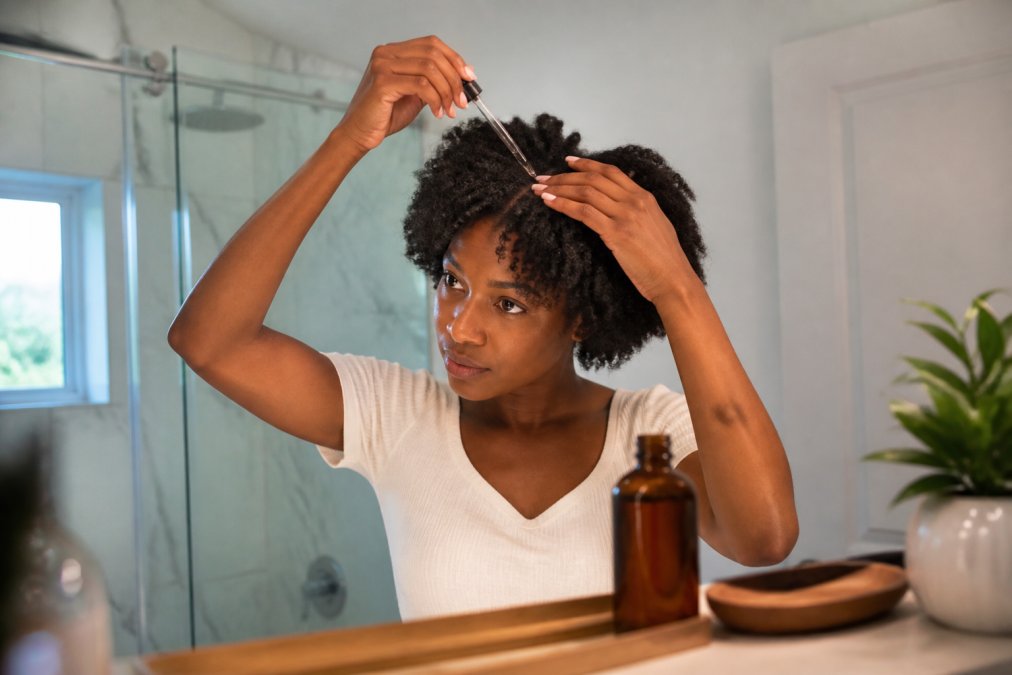
Haitian Black Castor Oil and Other Cold-Pressed Oils
Haitian Black Castor Oil is pressed from castor beans indigenous to Haiti and is known for stimulating hair follicles, strengthening roots, and reducing breakage and split ends. It is rich in ricinoleic acid and omega-6 fatty acids, which make it an excellent moisturizer for scalp, hair, and skin.
Other oils worth rotating in:
- Jamaican black castor oil: similar profile, slightly lighter
- Coconut oil: penetrates the shaft, good for low-porosity hair
- Avocado oil: heavy, excellent for dry ends
- Rosemary oil: often blended in for scalp circulation
How to Apply Oils for Maximum Absorption
Apply oil to damp, not soaking wet, hair. Warm two to three drops between your palms first. Work from mid-length to ends, then massage the remainder into your scalp for two minutes.
DIY Hair Masks for Brittle Hair
DIY hair masks for brittle hair fall into two categories: protein masks and moisture masks. Choosing the wrong one is why so many homemade treatments seem to do nothing.
Protein Mask vs. Moisture Mask: Which to Use
Use a protein mask when hair feels mushy and stretches without bouncing back. Use a moisture mask when hair feels dry, rough, and snaps at the slightest tug.
| Mask Type | Use When | Key Ingredients | Frequency |
|---|---|---|---|
| Moisture | Dry, rough, snapping | Avocado, castor oil, honey | Weekly |
| Protein | Mushy, over-stretched | Egg, yogurt, olive oil | Every 2-3 weeks |
| Balanced | Maintenance | Banana, coconut oil, honey | Every 10 days |
How to Prevent Hair Breakage at Home
Preventing hair breakage at home comes down to reducing friction, protecting the cuticle, and accounting for the environment your hair lives in. Most of the damage happens in the ten minutes after you step out of the shower, and in the water that hits your hair before you even reach for a product.
Gentle Detangling and Styling Habits
Detangle on damp hair loaded with conditioner, never on dry hair. Start at the ends and work upward in small sections. A wide-tooth comb or your fingers beats a brush every time.
Heat and Mechanical Protection
Always use a heat protectant before flat irons or blow dryers. Keep tools under 350°F and limit heat styling to once a week if your hair is already fragile. A direct 400°F contact does not just dry the cuticle, it can create a permanent crack that only grows out.
The Environmental Factor Most Guides Skip
Your climate and water supply shape breakage as much as your products do. This is the piece most remedy lists leave out, and it is often why a routine that works for one person fails for another.
- Hard water: high mineral content leaves calcium and magnesium deposits that coat the cuticle, making hair feel rough and resist moisture. If your shower leaves spots on glass, your hair is getting the same film. A clarifying wash every few weeks, or a filtered showerhead, helps strip the buildup.
- Humidity: in high-humidity climates, the cuticle lifts and hair absorbs moisture from the air, which can swell the shaft and make it more prone to snapping when combed. In low-humidity climates, the opposite happens, hair loses moisture to the air and becomes brittle. Sealing with an oil or leave-in after washing is the countermeasure in both cases.
- Sun exposure: UV light degrades the protein structure of the hair shaft the same way it ages skin. A leave-in with UV protection or a hat during long outdoor exposure limits the damage.
- Chlorine and saltwater: both strip natural oils and leave the cuticle rough. Rinse before and after swimming, and follow with a moisturizing conditioner.
- Dry indoor air: heating and air conditioning pull moisture from the air and from your hair. A humidifier in the bedroom and a satin-lined cap at night cover most of that ground.
A Simple Weekly Protection Rhythm
- Wash with a sulfate-free cleanser
- Deep condition for 20 minutes with heat
- Apply leave-in to damp hair
- Seal ends with an oil
- Detangle gently, section by section
- Sleep on satin or in a loose braid
- Trim split ends every 8-12 weeks
Doyley's Mega Moisture Leave-In Conditioner & Detangler combines Chebe Powder, rosemary, and peppermint oils to hydrate, soften, and prevent split ends. It is $9.99 for 4oz.
Doyley's Haitian Black Castor Oil Mega →

Vitamins for Hair Breakage: What Actually Helps
Vitamins for hair breakage only move the needle when you are correcting a deficiency. If your diet is already balanced, adding a supplement rarely changes anything measurable, but if you are low in one of the nutrients below, correcting it can visibly reduce snapping within a few growth cycles.
The Nutrients Tied to Hair Strength
- Iron: carries oxygen to the follicle. Low ferritin (stored iron) is one of the most common findings in people with excess shedding and breakage, especially those who menstruate or eat plant-based diets. Pair plant iron with vitamin C to improve absorption, and keep coffee and tea away from iron-rich meals, tannins block uptake.
- Vitamin D: involved in the hair growth cycle. Deficiency is widespread in northern climates and among people who get little sun exposure. Ask for a 25-hydroxyvitamin D test rather than guessing.
- Zinc: supports follicle repair and oil-gland function. Too much zinc, however, can pull copper levels down, so it is not a nutrient to megadose.
- B-complex and biotin: biotin gets the most marketing, but it only helps if you are genuinely low. A common pattern is people spending months on high-dose biotin with no change because their levels were never the problem.
- Omega-3 fatty acids: support scalp health and the lipid barrier that keeps the hair shaft supple. Fatty fish, walnuts, flaxseed, and cold-pressed oils are the food sources.
Dietary Sources First
Food beats pills for most people. Eggs, salmon, sardines, leafy greens, lentils, beans, nuts, seeds, and fortified grains cover most of the list. If you eat a varied diet with adequate protein, you are likely already getting what your hair needs.
When Supplements Make Sense
Supplements are worth considering when a blood test shows a deficiency or when a clinician recommends them for a specific reason, pregnancy, restricted diets, or a diagnosed absorption issue. The NIH Office of Dietary Supplements fact sheets are the most reliable place to check what each nutrient does and what a safe upper intake looks like.
A few practical guardrails:
- Get lab work before starting anything, especially iron and vitamin D.
- Treat supplements as a correction, not a permanent add-on.
- Give any change at least three to six months. Hair grows slowly, and results lag behind the fix.
- Tell your clinician about everything you take. Some nutrients interact with medications and with each other.
Testing Hair Porosity to Choose the Right Remedy
Hair porosity testing tells you how easily your hair absorbs and holds moisture, and it should be the first step before buying any product. Most guides skip this, which is why so many people cycle through remedies that were never right for their hair.
- Floats on top: low porosity. Tight cuticle. Use lightweight oils and heat when deep conditioning.
- Sinks slowly to the middle: normal porosity. Most products work. Maintain with regular deep conditioning.
- Sinks straight to the bottom: high porosity. Raised cuticle. Needs heavier oils, protein, and leave-in layers.
Post-Treatment Maintenance: Keeping Hair Strong
Post-treatment maintenance is where most routines fall apart. People fix the breakage, get complacent, and slide back into old habits within two months.
Build a simple weekly rhythm:
- Wash with a sulfate-free shampoo bar
- Deep condition for 20 minutes with heat
- Apply leave-in to damp hair
- Seal ends with Haitian Black Castor Oil
- Detangle gently, section by section
- Sleep on satin or in a loose braid
- Trim split ends every 8-12 weeks
Frequently Asked Questions
What stops hair breakage naturally?
Natural remedies for hair breakage focus on reducing mechanical stress and restoring moisture. Gentle detangling with a leave-in conditioner, limiting heat styling, and using cold-pressed oils like Haitian black castor oil can help. A deep conditioner with chebe powder strengthens strands over time. Protein treatments every 4-6 weeks repair damage, while moisture masks maintain elasticity. Avoiding tight hairstyles and sleeping on satin pillowcases also reduce friction. Consistency matters more than any single product.
Are there any cures for hair loss in 2026?
There is no universal cure for hair loss, but many cases of breakage-related thinning improve with better hair care. If the follicle is healthy, reducing breakage allows hair to grow longer. Natural oils like Haitian black castor oil can stimulate follicles and improve scalp circulation. However, genetic or medical hair loss may need professional treatment. A dermatologist can determine if breakage or shedding is the root cause.
What vitamin am I lacking if my hair is breaking?
Breakage can signal low levels of B-complex vitamins, vitamin D, iron, or zinc. Vitamin C supports collagen production for hair fiber integrity, while omega-3 fatty acids keep the scalp hydrated. A blood test can confirm deficiencies. Before supplementing, try increasing dietary sources like leafy greens, eggs, nuts, and fatty fish. Always consult a healthcare provider before starting new vitamins for hair breakage.
Can breakage hair grow back?
Yes, hair can grow back if the follicle is intact. Breakage happens along the hair shaft, not at the root, so the follicle continues producing new hair. Once you stop the damage and adopt a strengthening routine, you will see healthier growth within a few months. Regular deep conditioning, gentle handling, and oils like Haitian black castor oil support recovery. Patience is key, as hair grows about half an inch per month.
Can hair breakage be reversed naturally?
Breakage cannot be reversed because the hair shaft is not living tissue, but you can prevent further damage and improve the look of existing hair. Trim split ends to stop them traveling up the shaft. Use DIY hair masks for brittle hair with ingredients like avocado, honey, and castor oil to restore moisture. Over time, new growth will be stronger if you maintain a consistent routine and avoid harsh chemicals.
How often should I use natural oil treatments for hair breakage?
For most hair types, applying natural oils two to three times per week is enough. If your hair is very dry or brittle, you can do a hot oil treatment weekly. Haitian black castor oil can be used on the scalp several times a week to stimulate follicles. Over-oiling can weigh hair down, so start with a small amount and adjust based on how your hair responds.
Does diet affect hair breakage?
Diet plays a major role in hair strength. Protein provides the building blocks for keratin, while iron, zinc, and B-complex vitamins support growth and repair. Omega-3 fatty acids reduce inflammation and keep the scalp moisturized. A diet lacking these nutrients can lead to brittle hair and increased shedding. Focus on whole foods like eggs, salmon, spinach, and nuts to support hair from within.