

Top 5 Oils for Thinning Edges: Regrow in 2026
Table of Contents
- What Causes Thinning Edges?
- Quick Comparison: Top 5 Oils for Thinning Edges
- 1. Haitian Black Castor Oil: The Gold Standard for Thinning Edges
- 2. Jamaican Black Castor Oil: High-Ash Power for Damaged Hair
- 3. Rosemary Oil: Follicle Stimulation Backed by Tradition
- 4. Peppermint Oil and Jojoba Oil: Circulation and Moisture Balance
- How to Regrow Edges Naturally: Application Techniques That Work
- How Long to See Hair Growth Results?
- Frequently Asked Questions
Last Updated: September 17, 2026
What Causes Thinning Edges?
Thinning edges rarely happen overnight and almost never have a single cause. The most common culprit is traction alopecia, hair loss triggered by repeated tension on the hairline, tight ponytails, braids, weaves, and glued-on styles pull at the follicle until it weakens and stops producing healthy hair. Addressing these mechanical stressors early is essential to stop hair thinning and restore the natural resilience of your hairline.
Chemical damage ranks second: relaxers, bleach, and heat tools near the hairline break down the hair shaft and inflame the scalp. Add friction from bonnets, scarves, and pillowcases, and the delicate hairs along your perimeter take far more abuse than the rest of your head.
Nutrition matters too. The hair cycle depends on protein, iron, and essential fatty acids, and when those run low, the hairline is often the first place thinning shows. The good news: this type of hair loss is often reversible when you remove the tension and feed the follicle. That's exactly what the right oil routine is designed to do.
Quick Comparison: Top 5 Oils for Thinning Edges
Here's how the five best oils for thinning edges compare at a glance:
| Oil | Best For | Key Strength | How to Use |
|---|---|---|---|
| Haitian Black Castor Oil | Overall regrowth | Ricinoleic acid, omega-6 | Massage into edges 3-4x weekly |
| Jamaican Black Castor Oil | Damaged, brittle hair | High ash content, vitamin E | Blend with a carrier oil |
| Rosemary Oil | Follicle stimulation | Boosts scalp circulation | Dilute 2-3 drops per tablespoon |
| Peppermint Oil | Circulation and itch relief | Cooling, anti-inflammatory | Dilute before applying |
| Jojoba Oil | Moisture balance | Mimics natural sebum | Use as a carrier oil daily |
1. Haitian Black Castor Oil: The Gold Standard for Thinning Edges
If you only try one oil, make it this one. Haitian Black Castor Oil, traditionally known as Lwil Maskriti, is cold-pressed from castor beans indigenous to Haiti and rich in ricinoleic acid and omega-6 fatty acids, the compounds that make castor oil effective at stimulating follicles and strengthening roots.


It's lighter in color and texture than its Jamaican cousin, so it absorbs without a heavy film, which matters for fine hair, the texture most prone to looking weighed down.
Doyley's Beauty Care offers authentic Doyley's Haitian Black Castor Oil 4oz at $10.99, extracted from castor beans indigenous to Haiti. It's known to reduce breakage and split ends while combating dry, flaky, itchy scalps. For most people, this is the single best starting point for thinning edges.
2. Jamaican Black Castor Oil: High-Ash Power for Damaged Hair
Jamaican Black Castor Oil is processed the traditional way, with beans roasted and boiled to produce a thicker oil with higher ash content, the ash gives it the dark color and heavier, more medicinal texture. It's packed with ricinoleic acid, omega fatty acids, and vitamin E.

The trade-off is real: this oil is thick, and on fine or low-density hair it can leave edges greasy and limp. Blend it with a lighter carrier oil, or choose a pre-mixed formula.
That's why Doyley's created the Doyley's Premium Haitian and Jamaican Black Castor Oil 1:1 Blend 4oz at $11.99. It pairs the lighter Haitian oil with the high-ash Jamaican oil in one hexane-free bottle, giving you the best of both textures without the guesswork.
3. Rosemary Oil: Follicle Stimulation Backed by Tradition
Rosemary oil has become the most talked-about essential oil for hair thinning because of scalp circulation: its compounds increase blood flow to the scalp, supporting the anagen phase, the active growth stage of the hair cycle.
A common mistake is applying it undiluted, rosemary is potent and will irritate your scalp if used neat. Dilute two to three drops into a tablespoon of a carrier oil like jojoba or castor oil before it touches your skin.
Always run a patch test on your inner arm 24 hours before your first full application.
4. Peppermint Oil and Jojoba Oil: Circulation and Moisture Balance
Peppermint oil and jojoba oil solve two different problems, which is why they pair well. Peppermint's cooling sensation increases scalp circulation and calms the inflammation that contributes to hair thinning at the temples. Jojoba handles moisture.
Doyley's Haitian Black Castor Oil 4oz →
How to Regrow Edges Naturally: Application Techniques That Work
Regrowing edges naturally comes down to consistency and technique, the oil you choose matters less than how you apply it and how often. Here's a routine that works across hair types, plus the hair-type adjustments most guides skip.
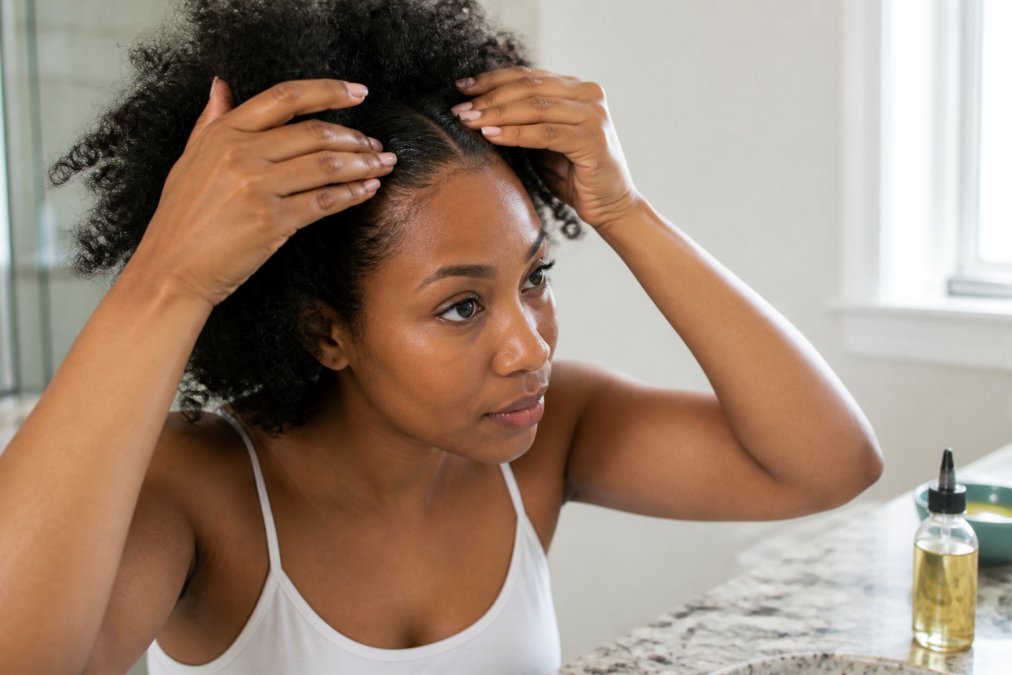
- Start with a clean scalp. Apply oil to a freshly washed, dry scalp so it can absorb properly.
- Warm a few drops between your palms to make the oil easier to spread.
- Massage the hairline in small circles for three to five minutes. This is the step most people rush.
- Focus on the follicle, not the strand. Work the oil into the scalp, not just along the hair.
- Leave it in for at least 30 minutes, or overnight with a satin bonnet.
- Repeat three to four times a week. Consistency beats intensity.
Why the Massage Matters as Much as the Oil
Fingertip massage isn't just a delivery method, it's part of the treatment. Mechanical stimulation increases local blood flow, the same mechanism that makes rosemary and peppermint oil useful, and practitioners report that clients who massage for a full three to five minutes improve faster than those who simply smooth oil over the surface. The friction also loosens dead skin and product buildup around the follicle opening, so the oil reaches the scalp instead of sitting on top of it.
Technique by Hair Type
Most guides give one routine and call it universal. That's the biggest weakness in the category. The right technique depends on your texture and density.
Post-Styling Recovery: What to Do After Braids, Weaves, or Tight Ponytails
If you want both the oil and a styling product, the Doyley's Haitian Black Castor Oil 4oz and Pomade 4oz 2-Pack Bundle at $21.99 covers the treatment and the daily hold.
How Long to See Hair Growth Results?
Expect the first visible changes in four to six weeks, with meaningful regrowth around the three-month mark. Hair grows in cycles, and the anagen phase must restart before you'll see new length at the hairline. That timeline assumes you've removed the cause of the thinning, if you're still wearing tight styles, no oil will outrun the tension.
The Internal Nutrition Factor Most Guides Ignore
Topical oils can support circulation, reduce inflammation, and moisturize the scalp. They cannot manufacture the raw materials hair is built from. If your edges are thinning and you're also low on certain nutrients, no oil routine will fully close the gap.
What Actually Determines Your Timeline
Four factors drive how fast you'll see results:
- How long the follicle was under stress. A hairline thinning for two months recovers faster than one traction-damaged for two years, the longer the follicle has been suppressed, the longer the anagen phase takes to restart.
- Whether the follicle is still alive. Oils can revive a dormant follicle but cannot regrow hair from one that has scarred over. Shiny, smooth, hairless patches along the hairline signal scarring, a medical issue, not an oil issue.
- Consistency of application. Three to four times a week, every week, for months. Missed weeks add up.
- Whether you've removed the tension. This is the single biggest variable. If you're still braiding, slicking, or gluing your edges, you're resetting the clock every time.
How to Track Progress
Photograph your hairline on day one and every four weeks under the same lighting, angle, and styling. Progress at the edges is gradual, and photos catch what your mirror misses, the hairline is one of the hardest places to judge by touch alone.
Frequently Asked Questions
What is the best oil to regrow thinning edges?
Haitian black castor oil is widely considered the best oil for thinning edges. It is rich in ricinoleic acid and omega-6 fatty acids, which help stimulate hair follicles, strengthen roots, and reduce breakage. Doyley's Haitian Black Castor Oil 4oz ($10.99) delivers these benefits in a hexane-free formula. For extra scalp support, rosemary and peppermint oils can be blended in, but castor oil remains the foundation for regrowth.
How long does it take for thinning edges to grow back with oil?
Most people see noticeable improvement in 3 to 6 months with consistent use. Hair grows about half an inch per month, so patience is key. Applying oil 3 to 4 times per week and massaging it into the edges helps stimulate scalp circulation. If you do not see any change after 6 months, consult a dermatologist to rule out underlying conditions like traction alopecia or nutritional deficiencies.
Can castor oil really help with thinning edges?
Yes. Castor oil is packed with ricinoleic acid, which has anti-inflammatory and moisturizing properties that support scalp health. It also helps seal moisture into the hair shaft, reducing breakage that makes edges look thinner. Doyley's Haitian Black Castor Oil is hexane-free and sourced from Haitian castor beans, so you get a potent, authentic product. Regular use can improve hair density along the hairline.
What causes thinning edges in natural hair?
Thinning edges often result from tight hairstyles like braids, ponytails, or wigs that pull on the hairline, leading to traction alopecia. Chemical treatments, heat damage, and poor scalp circulation also contribute. Nutritional deficiencies in iron, zinc, or vitamin D can slow growth. Stress and hormonal changes play a role too. Switching to loose styles and using nourishing oils like castor oil can help reverse early damage.
How often should I apply oil to my edges?
Apply oil to your edges 3 to 4 times per week for best results. Massage 2 to 3 drops into the hairline for 2 to 3 minutes to boost scalp circulation. You can use it more often if your scalp is very dry, but daily application is not necessary. Consistency matters more than frequency. Always do a patch test first if you have sensitive skin or are trying a new essential oil blend.