

5 Ways to Moisturize Dry Curly Hair for Soft, Bouncy Curls
Last Updated: October 22, 2026
Quick Summary
To moisturize dry curly hair, apply water and leave-in conditioner to damp hair, deep condition weekly, then seal with a lightweight oil or pomade in that order. Water hydrates, conditioner helps hair retain it, and oil slows water loss between washes.
- Apply leave-in conditioner in four to six sections for more even coverage than one big pump.
- Deep condition once weekly for most curl patterns, or twice weekly for very dry hair.
- Use two to three drops of black castor oil for fine, medium-length hair after each wash.
- Refresh damp hair with a light water and leave-in mist, then scrunch and let air dry.
- Sleep on a satin or silk pillowcase to reduce friction and help curls hold moisture overnight.
Table of Contents
- Why Is My Curly Hair So Dry?
- 1. Start With Water and a Leave-In Conditioner on Damp Hair
- 2. Deep Condition Weekly to Rebuild Moisture Retention
- 3. Seal in Moisture With a Lightweight Oil or Pomade
- 4. How to Keep Curly Hair Moisturized Between Washes
- 5. Build a Curly Hair Moisture Routine That Fits Your Pattern
- How to Moisturize Curly Hair Without Weighing It Down
- Frequently Asked Questions
Why Is My Curly Hair So Dry?
Dry curly hair usually comes down to one structural fact: the natural oils your scalp produces have a harder time traveling down a spiraled strand than a straight one.
At Doyley's Beauty Care, we hear this constantly, and the fix is rarely one miracle product, it is a sequence of small habits that help curls hold water longer.
If you want to moisturize dry curly hair effectively, you need to understand the difference between hydration (adding water) and moisture retention (keeping that water from evaporating).
Common culprits include overwashing, rough drying with a terry towel, heat styling without protection, product buildup that blocks absorption, and dry indoor air.
1. Start With Water and a Leave-In Conditioner on Damp Hair
The first step in any curly hair moisture routine is water, applied to hair that is still wet or damp.
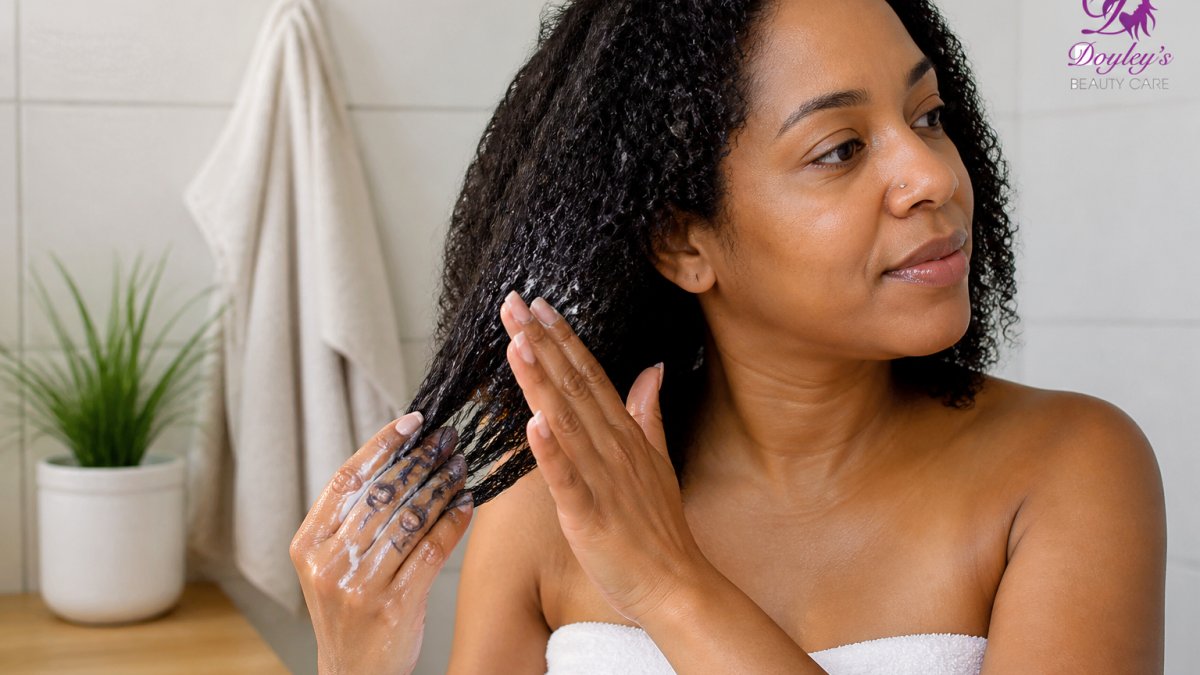
Here is how we would do it:
- Wash or co-wash as usual, then leave hair dripping wet.
- Squeeze out excess water gently, never wring or twist.
- Apply a generous amount of leave-in conditioner from mid-shaft to ends.
- Use a wide-tooth comb to distribute evenly.
- Scrunch upward to encourage curl definition.
2. Deep Condition Weekly to Rebuild Moisture Retention
A weekly deep conditioning session is the closest thing curly hair has to a reset button, replenishing what shampoo strips out.

The Cleveland Clinic's overview of hair structure and damage explains that the outer cuticle layer lifts and roughens when hair is dry or damaged, which is exactly why conditioning matters so much for curls.
Our Doyley's Haitian Black Castor Oil Mega Moisture Deep Conditioner pairs Haitian black castor oil with Chebe Powder to deliver intense hydration, improve manageability, and help smooth frizz.

3. Seal in Moisture With a Lightweight Oil or Pomade
Sealing is the step most people skip, and it is the one that makes moisture last. Oil does not add water; it creates a barrier that slows water loss.
For fine or thin curls, use a light hand. Two to three drops of Doyley's Haitian Black Castor Oil warmed between palms is enough for medium-length hair.
For thicker textures or structured styles like twists and slick-backs, our Haitian Black Castor Oil Pomade coats the shaft to lock in moisture, add shine, and reduce frizz with a non-greasy hold.

| Hair Type | Seal With | How Much | Frequency |
|---|---|---|---|
| Fine or thin curls | Black castor oil | 2-3 drops | After each wash |
| Medium density | Black castor oil | 4-5 drops | After each wash |
| Thick or coily | Pomade or oil | Small fingertip scoop | Wash day and refresh days |
| Transitioning or heat-damaged | Pomade | Light layer on ends | 2-3 times weekly |
4. How to Keep Curly Hair Moisturized Between Washes
Keeping curls hydrated between wash days is where most routines quietly fall apart. Waiting a full week to address daily moisture loss leaves curls crispy by day three. The fix is not more product, it is a repeatable refresh sequence with the right order and amount.
The refresh sequence, in order
- Assess before you spray. Pinch a section. If it feels dry but still stretches, it needs water. If it feels rough and tangles at the touch, it needs conditioning. If it feels mushy or limp when wet, it likely needs protein, and adding more moisture will make it worse.
- Mist lightly, not soaking wet. Water first, always. Over-wetting on non-wash days stretches the curl and encourages frizz.
- Add a small amount of leave-in to the sections that need it. A pea-sized amount per section is usually enough for medium-density hair. Focus on mid-shaft and ends, not the roots.
- Scrunch upward and walk away. Touching curls while they dry disrupts definition and spreads oil from your hands.
A simple refresh mist: fill a spray bottle with water and a small amount of leave-in conditioner. Shake, mist dry sections, scrunch gently, and let air dry.
How much product per refresh
| Hair Type | Water | Leave-In | Sealant |
|---|---|---|---|
| Fine or thin curls | Light mist | Pea-sized per section | 1-2 drops oil on ends only |
| Medium density | Moderate mist | Pea- to dime-sized per section | 2-3 drops oil |
| Thick or coily | Generous mist | Dime-sized per section | Small fingertip scoop of pomade |
Start with less than you think you need. Add more only to the sections that still feel dry after styling. Oversaturating curls with leave-in and oil creates buildup, which blocks water from entering the strand and leaves hair feeling dry despite the layers.
Habits that protect moisture between washes
- Sleep on a satin or silk pillowcase to reduce friction
- Pineapple or loosely band hair at night to preserve curl pattern
- Avoid touching curls throughout the day
Hard water, climate, and indoor humidity
In hard water areas, mineral buildup can make hair feel rough and resistant to moisture, which is why many curl-focused routines include a shower filter. Winter's dry indoor air pulls moisture from hair, so a humidifier in the room where you sleep can help. In humid summer months, hair absorbs moisture from the air and frizzes, so lighter sealing and a bit of hold work better than heavy creams.
Nighttime protection and friction reduction
The highest-return habit between washes is what you do at night. Cotton pillowcases grab the cuticle and pull moisture out while you sleep. A satin or silk pillowcase, a loose pineapple at the crown, or a satin bonnet all reduce friction and help curls hold shape and moisture until morning, two minutes at night saves far more moisture than an extra pump of leave-in the next day.
5. Build a Curly Hair Moisture Routine That Fits Your Pattern
Curl pattern and porosity change how much product your hair needs and how often. A one-size routine will always under-serve someone. The goal is not to memorize a chart, it is to read your hair and adjust.
Curl pattern: a starting point, not a rule
Loose waves (2A-2C) typically need lighter products and less oil. Water-based leave-in plus a few drops of oil on the ends usually outperforms a heavy cream.
Tight coils (4A-4C) usually need richer conditioning and more frequent sealing. Layering a leave-in, then a pomade on the ends, gives hold without greasiness.
Pattern is a starting point. Two people with the same pattern can need very different routines because porosity differs.
Porosity: the variable that changes everything
High-porosity hair absorbs water quickly and loses it just as fast. It benefits from heavier sealing and layering, leave-in, then oil or pomade, to slow water loss.
Low-porosity hair resists water and can feel coated easily. Lighter layers, warm water, and less frequent heavy sealing help. If product sits on top of your hair instead of sinking in, you are likely low porosity.
How to tell whether hair needs water, conditioning, or protein
This is the diagnostic step most routines skip, and it is the reason people treat every dry or frizzy curl with the same product.
- Needs water: feels dry but still stretches. Fix with a water-based refresh and leave-in.
- Needs conditioning: feels rough and tangles easily. Fix with a deep conditioning session.
- Needs protein: feels mushy or limp when wet. Use a protein treatment sparingly, overuse makes hair stiff and brittle.
If you are unsure, start with water and conditioning. Protein is the step to add last, not first.
Product layering order and how much to use
The order matters more than the brand: water first, conditioner second, oil or pomade last. Applying oil to dry hair seals nothing in.
| Step | Product | How Much | Where |
|---|---|---|---|
| 1 | Water | Damp, not dripping | Whole head |
| 2 | Leave-in conditioner | Pea- to dime-sized per section | Mid-shaft to ends |
| 3 | Oil or pomade | 2-5 drops oil, or small fingertip scoop pomade | Ends and mid-shaft |
Start with less than you think you need. Add more only to the sections that still feel dry after styling. Focus leave-in and oil on the mid-shaft and ends rather than the roots, where product tends to accumulate and flatten volume.
A simple weekly framework
| Day | Action | Time |
|---|---|---|
| Wash day | Cleanse, leave-in, seal, style | 30-45 minutes |
| Mid-week | Refresh with water and leave-in mist | 5 minutes |
| Weekly | Deep condition | 20-30 minutes |
| Nightly | Protect with satin or pineapple | 2 minutes |
When to adjust the routine
If hair feels weighed down, reduce oil and leave-in before changing products. If it feels crispy by day two, add a mid-week refresh before a heavier sealant. If it feels rough after washing, check for hard water or buildup before layering more conditioner. Small adjustments, made one at a time, tell you far more than overhauling everything at once.
How to Moisturize Curly Hair Without Weighing It Down
To moisturize dry curly hair without weighing it down, apply products in thin layers on damp hair and build up slowly, heavy-handed application is the main reason curls go flat.
For fine hair, water-based leave-in plus a few drops of oil outperforms a heavy cream every time.
The U.S. Food and Drug Administration's cosmetics information is a useful reference for understanding what is in the products you apply to your hair and scalp.
Dry, brittle curls are frustrating, but they respond well to a consistent routine built on water, conditioning, and sealing. Our Haitian Black Castor Oil line supports each step, from the Mega Moisture Leave-In Conditioner and Deep Conditioner to the Pomade and pure oil that seal it all in. Explore the Doyley's Haitian Black Castor Oil 4oz and Pomade 4oz Bundle to build your routine in one step, and add to cart when you are ready to give your curls the moisture they have been missing.
Frequently Asked Questions
How often should you moisturize dry curly hair?
Most curly hair benefits from moisture added every two to three days, with a full wash day routine once a week. On wash day, layer water, leave-in conditioner, and a sealing oil. Between washes, refresh with a water-based mist or a small amount of leave-in conditioner on damp sections. If your curls feel straw-like daily, add a deep conditioning treatment weekly. Adjust frequency based on porosity: high-porosity hair often needs more frequent top-ups because it loses moisture faster.
Should you moisturize curly hair when it is wet or dry?
Apply moisturizing products to damp hair, not soaking wet or completely dry. Water is what actually hydrates curls, so misting or washing first opens the cuticle to receive conditioner. Applying leave-in conditioner to damp hair helps it absorb evenly and reduces frizz. On completely dry hair, products sit on the surface and can leave a greasy film. For between-wash refreshes, lightly mist dry curls with water before adding more leave-in or oil.
Does oil moisturize dry curly hair?
Oil does not add water to hair, but it helps seal moisture in. Think of oil as the lid on the pot: water and conditioner hydrate, then a lightweight oil or pomade coats the strand to slow moisture loss. Applying oil to dry, parched curls without water or leave-in underneath can leave hair feeling greasy but still dry. Use oils after your leave-in conditioner on damp hair, and use a small amount so curls stay bouncy rather than weighed down.
How do you keep curly hair moisturized between wash days?
Keep a spray bottle of water mixed with a little leave-in conditioner on hand. Lightly mist the sections that feel dry, scrunch gently, and let curls air dry. Sleep on a satin pillowcase or in a satin bonnet to reduce friction, which strips moisture overnight. Avoid touching curls throughout the day. If your ends feel rough, seal them with a small amount of lightweight oil or pomade. Refreshing this way every two to three days keeps curls soft without a full wash.
How can you moisturize curly hair without making it greasy?
Use lightweight products and small amounts, applied in layers. Start with water, then a leave-in conditioner, then only a pea-sized amount of oil or pomade to seal. Focus oil on mid-lengths and ends rather than the scalp. Choose a leave-in that hydrates without heavy butters if your hair is fine or low porosity. Applying products to damp hair helps them absorb instead of sitting on top. If hair feels coated, clarify once a month to remove buildup.