

7 Ways to Spot Synthetic Additives in Natural Oils
Table of Contents
- Why Checking for Synthetic Additives Matters
- 1. Learn How to Read Oil Ingredient Labels
- 3. Spot Common Synthetic Additives and Their Purpose
- 4. Distinguish Natural Oils from Synthetic Mixtures
- 5. Ask the Right Questions About Oil Sourcing
- 6. Understand the Limits of Smell, Appearance, and Home Tests
- 7. Know When Laboratory Verification Becomes Necessary
- Frequently Asked Questions
Last Updated: October 5, 2026
Why Checking for Synthetic Additives Matters
When you're shopping for natural oils, the label can tell you a lot, but not everything. Synthetic additives in natural oils range from preservatives that extend shelf life to fragrance compounds that have nothing to do with the plant itself.
The challenge isn't that synthetic additives are inherently bad. Many serve legitimate purposes: preventing rancidity, stabilizing formulations, or enhancing texture. The real issue is transparency.
1. Learn How to Read Oil Ingredient Labels
The ingredient list is the foundation of understanding what's truly in your oil.
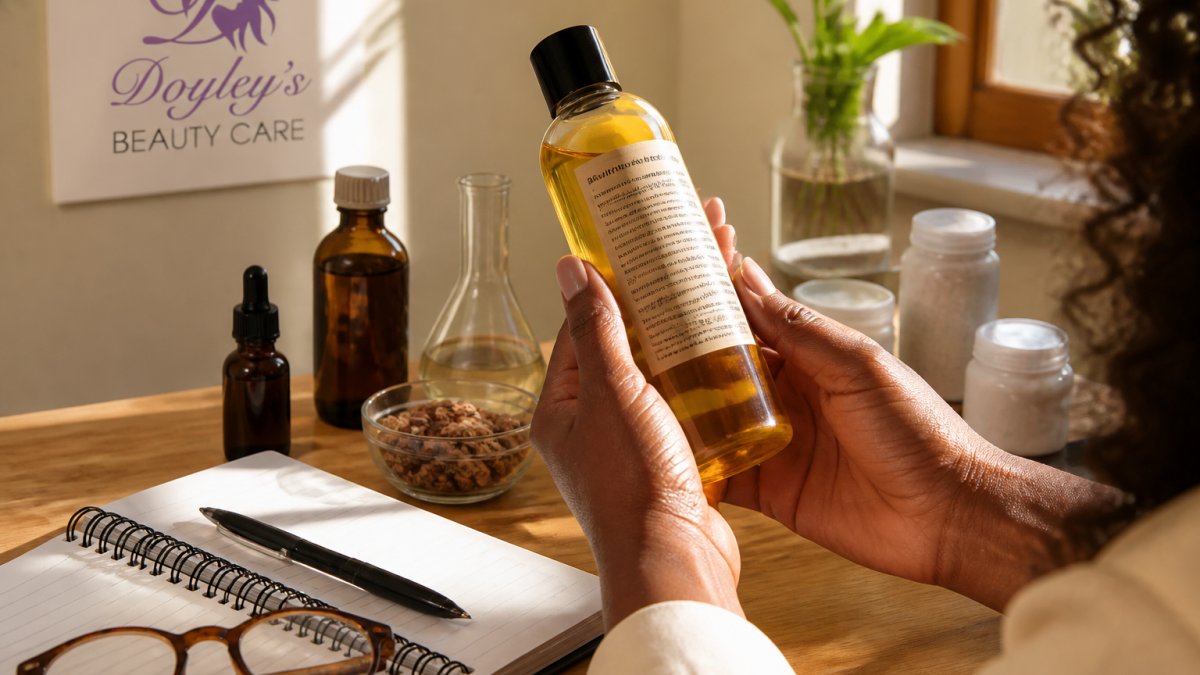
What the ingredient list tells you
Pay attention to what comes after the primary oil.
(/products/doyleys-haitian-black-castor-oil-4oz) has a distinctive earthy scent), but added fragrance is a separate component.Watch for terms like "natural fragrance" or "nature-identical fragrance." These sound reassuring but don't guarantee purity.
Essential oils listed by name (like "lavender oil" or "rose oil") are different. These are actual plant extracts, not fragrance blends.
3. Spot Common Synthetic Additives and Their Purpose
Understanding why additives are included helps you decide whether they align with your priorities.
Preservatives, colorants, and antioxidants
Preservatives prevent microbial growth and rancidity. Common synthetic preservatives include:
- Parabens (methylparaben, propylparaben): Inexpensive, effective, and widely used despite some consumer concerns
- Phenoxyethanol: A synthetic preservative that prevents bacterial and fungal growth
- Sodium benzoate or potassium sorbate: Often used in water-based formulations to prevent spoilage
Natural preservative alternatives exist (like vitamin E or rosemary extract), but they're often less effective at preventing all types of contamination.
Colorants make oils visually appealing. Synthetic dyes like FD&C Yellow 5, Red 40, or Blue 1 are petroleum-derived and serve no functional purpose beyond appearance.
Antioxidants slow oxidation and rancidity. Synthetic options like BHA (butylated hydroxyanisole) or BHT (butylated hydroxytoluene) are highly effective but controversial.
When additives may require closer scrutiny
Some additives warrant extra attention depending on your goals and sensitivities:
- Silicones: They coat the hair or skin, creating temporary smoothness without actual conditioning. If you're seeking deep nourishment or planning to use the oil long-term, silicones may interfere with your hair's natural moisture balance.
- Synthetic fragrances: These can trigger sensitivities or allergies in some people, especially those with reactive scalps or sensitive skin.
- Humectants like propylene glycol: While not inherently harmful, they can draw moisture from the air, and some people find them irritating in concentrated oils.
- Emulsifiers: These allow oil and water to mix, creating lighter textures. If you want a pure oil without water content, emulsifiers signal dilution.
4. Distinguish Natural Oils from Synthetic Mixtures
Not all products labeled "oil" are pure oils. Some are blends designed to mimic oil's benefits while offering different texture or absorption profiles.
Signs of synthetic dilution or adulteration in oils
A pure oil should feel consistent from the first drop to the last. Synthetic mixtures often show telltale signs:
- Inconsistent texture: If the oil feels thin at first, then thick, or separates over time, it may contain synthetic emulsifiers or dilutants that aren't fully integrated.
- Rapid absorption: Genuine oils absorb slowly because they're occlusive. If an oil absorbs within seconds, it likely contains silicones or water-soluble synthetics that evaporate quickly.
- No residue or buildup: Pure oils leave a subtle shine and slight residue. Products that disappear completely often contain volatile synthetics designed to vanish.
- Unusual color consistency: Natural oils vary slightly by batch due to plant variation. If every bottle looks identical, synthetic colorants may be involved.
- Price significantly below market average: Genuine natural oils cost more to source and process. Suspiciously cheap products often indicate dilution with cheaper synthetic bases.
- Lack of natural odor: Most natural oils have a distinctive plant-based scent. If an oil smells purely floral or fruity, synthetic fragrance is likely masking (or replacing) the natural aroma.
Adulteration, mixing cheaper oils or synthetics into premium oils, is common in the industry. Haitian Black Castor Oil, for example, is sometimes diluted with mineral oil or other cheaper bases to increase volume. Our Doyley's Haitian Black Castor Oil is sourced directly from the finest castor beans indigenous to Haiti, ensuring authenticity and potency without synthetic fillers.

5. Ask the Right Questions About Oil Sourcing
Direct communication with the brand can reveal what the label doesn't.
What authentic sourcing documentation looks like
Reputable oil producers can answer these questions with specifics:
- Where are the plants grown? Authentic brands name the region or country. Vague answers like "sourced globally" or "from trusted suppliers" suggest less transparency.
- How is the oil extracted? Cold-pressing, expeller-pressing, and solvent-free extraction are common methods. Avoid oils extracted with hexane or other chemical solvents if you're seeking natural products. Ask whether the extraction process is documented.
- What's the shelf life, and how is it preserved? If a brand uses only natural preservatives, they should be transparent about a shorter shelf life or storage requirements. If shelf life is unusually long without explanation, synthetic preservatives are likely involved.
- Are there third-party certifications? Look for certifications from organizations like USDA (for organic), Fair Trade, or independent testing labs. These provide external verification.
- Can they provide a Certificate of Analysis? Some brands offer lab reports showing the oil's composition and purity. This is a strong sign of confidence in the product.
Doyley's Beauty Care sources our Haitian Black Castor Oil directly from castor beans indigenous to Haiti. Our commitment to authenticity means we can speak directly to our sourcing, extraction methods, and quality standards. When you choose our products, you're getting the genuine article, not a diluted imitation.

6. Understand the Limits of Smell, Appearance, and Home Tests
Your senses are useful but imperfect tools for detecting synthetic additives.
Smell alone cannot reliably distinguish natural from synthetic fragrance. Many synthetic aromatic compounds smell identical to their natural counterparts because they have the same molecular structure.
Appearance is equally unreliable. Color, clarity, and viscosity depend on extraction method, plant variety, and storage conditions, not purity.
The viscosity test, observing how quickly oil flows, tells you about consistency but not composition.
7. Know When Laboratory Verification Becomes Necessary
When you need absolute certainty, laboratory testing is the gold standard.
GC/MS testing and what the results mean
Gas Chromatography-Mass Spectrometry (GC/MS) is the most reliable method for identifying individual compounds in an oil.
A GC/MS report shows:
- Peak identification: Each peak on the chromatogram represents a compound. The lab identifies what each compound is.
- Concentration levels: The report shows what percentage of the oil each compound comprises.
- Purity assessment: By comparing the results to known standards for authentic oils, the lab can identify synthetic additives or unexpected components.
- Contamination detection: GC/MS reveals heavy metals, pesticide residues, or microbial contamination that visual inspection can't detect.
Interpreting a GC/MS report requires some knowledge. The main components of genuine castor oil, for example, should show high levels of ricinoleic acid and oleic acid.
Some brands offer GC/MS reports publicly or upon request. This transparency is a strong indicator of confidence in their product.
GC/MS testing costs money, typically $200 to $500 per sample, which is why most consumers don't pursue it.
| Method | Cost | Reliability | What It Detects |
|---|---|---|---|
| Label Reading | Free | Moderate | Listed additives, ingredient order |
| Brand Communication | Free | Moderate | Sourcing transparency, extraction method |
| Sensory Tests (smell, appearance) | Free | Low | General characteristics, not synthetic content |
| GC/MS Laboratory Testing | $200-$500 | Very High | Exact molecular composition, adulterants, contaminants |
At Doyley's Beauty Care, we believe in putting the power in your hands. Explore our Doyley's Haitian Black Castor Oil 4oz or Doyley's Haitian Black Castor Oil 8oz to experience the difference genuine, potent oil can make for your hair, scalp, and skin. If you're interested in a premium blend, our Doyley's Premium Haitian and Jamaican Black Castor Oil 1:1 Blend 4oz combines the best of both Caribbean traditions, hexane-free and packed with ricinoleic acid and omega fatty acids for maximum nourishment.

Frequently Asked Questions
How can you tell if a natural oil has synthetic additives?
Start by scanning the ingredient label for unfamiliar chemical names, especially those ending in -cone, -paraben, or -sulfate. Check for vague terms like 'fragrance' or 'flavor,' which often hide synthetic compounds. Ask the seller for third-party testing results or GC/MS reports. Authentic oils like our Doyley's Haitian Black Castor Oil list simple, recognizable ingredients. If the label lacks transparency or the seller cannot answer sourcing questions, that's a red flag for synthetic additives or dilution.
What should you look for on a natural oil ingredient label?
Look for a short, simple ingredient list with plant-derived names you recognize. The first ingredient should be the oil itself (castor oil, coconut oil, etc.). Check for clear disclosure of any added essential oils or plant extracts with their botanical names. Avoid labels listing only 'fragrance' without specifying the source. Hexane-free processing should be explicitly stated. Our Doyley's products clearly identify Haitian Black Castor Oil as the primary ingredient.
Can fragrance in an oil be synthetic, and how do I know?
Yes. Synthetic fragrance is often listed simply as 'fragrance' or 'parfum' on labels, which does not reveal whether it comes from plants or is chemically synthesized. True essential oils and plant-derived fragrance are labeled with their botanical source (lavender oil, rose extract, etc.). Synthetic fragrance may smell stronger or more uniform than natural scents. If a label says 'fragrance' without specifying the source, ask the manufacturer directly whether it is essential oil or synthetic. Authentic natural oils disclose their fragrance sources completely.
What does 100% pure mean on an oil label?
True 100% pure means the oil contains only the oil itself, with no added fillers, synthetic preservatives, or diluting agents. However, this term is not regulated, so sellers can use it loosely. Verify purity by checking the full ingredient list, asking about processing methods (hexane-free is important), and requesting third-party testing documentation. Doyley's Haitian Black Castor Oil is authentic and potent, sourced from the finest castor beans in Haiti with no synthetic additives or hexane processing. Transparency about sourcing and testing confirms true purity.
What questions should you ask a seller about a natural oil?
Ask where the oil is sourced and whether they can provide documentation of origin. Inquire about processing methods, specifically whether hexane or other solvents were used in extraction. Request third-party testing results or GC/MS analysis if available. Ask whether the oil contains any added synthetic preservatives, fragrance, or colorants. Find out the shelf life and storage recommendations, which indicate whether synthetic stabilizers are present. Sellers of authentic oils like Doyley's Beauty Care are transparent about sourcing, processing, and ingredient integrity and welcome these questions.