

7 Best Carrier Oils to Mix With Black Castor Oil
Last Updated: October 24, 2026
Quick Summary
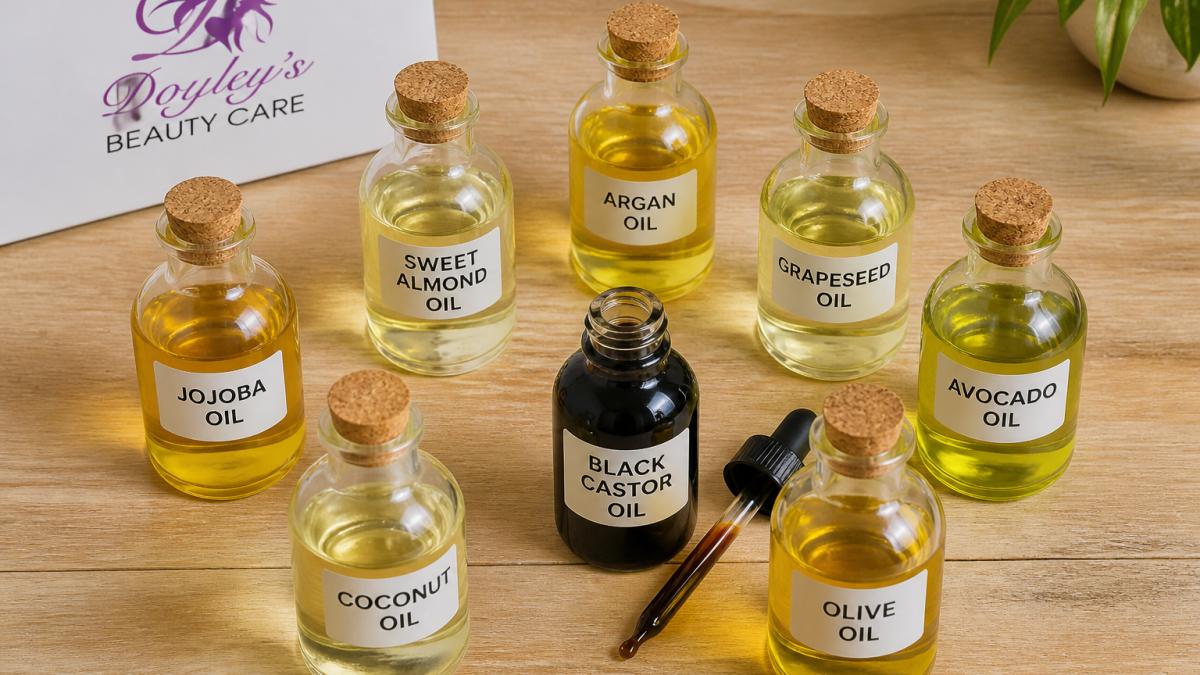
The best carrier oils to mix with black castor oil are jojoba for fine hair, coconut for coily textures, and grapeseed for oily scalps or fine strands. Sweet almond, olive, avocado, and sesame also work well, and you should keep black castor oil at or below half of any blend.
- Blend three parts jojoba with one part black castor oil for fine, thin hair.
- Mix two parts melted coconut oil with one part black castor oil for coily textures.
- Use roughly four parts grapeseed to one part black castor oil for oily scalps.
- Never let black castor oil exceed half of your carrier oil blend.
- Patch test a new oil on your inner forearm and wait a full day.
Table of Contents
- Why Black Castor Oil Needs a Carrier Oil
- The 7 Best Carrier Oils to Mix With Black Castor Oil at a Glance
- 1. Jojoba Oil: The Lightweight Option for Fine Hair
- 2. Coconut Oil: The Heavyweight for Coily Textures
- 3. Sweet Almond Oil: The Middle Ground for Everyday Use
- 4. Grapeseed Oil: The Thinnest Oil on the List
- 5. Olive Oil: The Pantry Staple for Dry Scalps
- 6. Avocado Oil: The Rich Option for Brittle Ends
- 7. Sesame Oil: The Traditional Warm-Oil Choice
- How to Dilute Castor Oil for Hair Without Overdoing It
- What to Look for in a Black Castor Oil Base
- Building a Blend That Fits Your Routine
- Frequently Asked Questions
Why Black Castor Oil Needs a Carrier Oil
Black castor oil is one of the thickest oils you can put on your hair, and that thickness is exactly why it needs a partner. On its own, it sits on the surface, clumps strands together, and resists rinsing.
The principle is simple: a carrier oil is a plant-derived oil that dilutes a thicker or more concentrated oil and helps it spread across the scalp and strands. Carrier oils do not evaporate like essential oils. They stay on the surface, carry the heavier oil with them, and add their own conditioning properties along the way.
Thickness, Viscosity, and Washability
Viscosity is the whole problem in one word. Black castor oil is viscous, meaning it pours slowly and clings to whatever it touches. That cling is useful for a targeted scalp treatment, less useful when you want to run a comb through your ends.
Mixing a thinner carrier oil into the blend lowers the overall viscosity. The result spreads more evenly, reaches more of the strand, and rinses clean with far less effort. If washing is your main frustration, our guide on how to wash castor oil out of hair properly walks through the order of operations that actually works.
How Black Castor Oil Differs From Regular Castor Oil
Black castor oil is not simply a darker version of the clear oil. The beans are roasted before pressing, which gives the oil its dark color, its ash content, and its distinct, smoky scent. Jamaican-style processing traditionally produces a thicker oil with higher ash content, while Haitian black castor oil, known as Lwil Maskriti, tends to be lighter in color and texture.
If you are unsure whether a heavier oil suits your hair's porosity, our article on whether black castor oil is good for low porosity hair covers how fine and low-porosity strands respond differently to thick oils before you commit to a blend ratio.
The 7 Best Carrier Oils to Mix With Black Castor Oil at a Glance
The best carrier oil to mix with black castor oil depends on your hair texture and what you want the blend to do. Jojoba suits fine hair, coconut suits coily textures, and grapeseed is the thinnest option for anyone who wants almost no weight at all.
| Carrier Oil | Weight | Best For | Suggested Ratio with Black Castor Oil |
|---|---|---|---|
| Jojoba | Light | Fine, thin hair | 3 parts jojoba to 1 part black castor |
| Coconut | Heavy | Coily, thick textures | 2 parts coconut to 1 part black castor |
| Sweet almond | Medium | Everyday scalp use | 2 parts almond to 1 part black castor |
| Grapeseed | Thinnest | Oily scalp, fine strands | 4 parts grapeseed to 1 part black castor |
| Olive | Medium-heavy | Dry, tight scalps | 2 parts olive to 1 part black castor |
| Avocado | Rich | Brittle, breaking ends | 2 parts avocado to 1 part black castor |
| Sesame | Medium | Warm-oil scalp massage | 2 parts sesame to 1 part black castor |
Once you have a blend you like, the next question is frequency. Our guide on how often to apply castor oil for hair health explains how to space applications so your scalp does not stay coated between wash days.
1. Jojoba Oil: The Lightweight Option for Fine Hair
Jojoba is the closest thing to a no-risk starting point. Its structure resembles the sebum your scalp produces naturally, so it absorbs quickly and leaves almost no residue.
Best for: fine, thin, or easily weighed-down hair; anyone who wants a leave-in treatment that does not look greasy. Skip if: your strands are very porous and drink up light oils within hours, in which case a richer partner works harder.
How to use it: blend three parts jojoba with one part Doyley's Haitian Black Castor Oil, warm a few drops between your palms, and work through the mid-lengths and ends. Focus the castor oil portion on the scalp and let the jojoba carry it down the strand.
2. Coconut Oil: The Heavyweight for Coily Textures
Coconut oil is the pairing most people reach for first, and for coily and thick textures it earns that reputation. It is solid at room temperature, melts on contact, and adds substantial conditioning weight.
The trade-off is real. Coconut oil can leave a heavy film on fine hair and may not rinse out with a single cleanse.
How to use it: mix two parts melted coconut oil with one part black castor oil, apply to damp hair after conditioning, and concentrate on the ends. Wash out within a day.
3. Sweet Almond Oil: The Middle Ground for Everyday Use
Sweet almond oil is the practical middle of this list. It is lighter than coconut, richer than grapeseed, and absorbs at a pace that suits regular use.
It also works well as a scalp oil because it spreads easily and does not clump. The drawback is subtle: almond oil is mild enough that people with very dry scalps sometimes find it does not deliver enough richness on its own, which is where the black castor oil percentage matters.
Best for: normal to dry scalps, medium textures, and anyone building a first blend. Skip if: you have a known tree nut allergy.
4. Grapeseed Oil: The Thinnest Oil on the List
Grapeseed oil is the thinnest carrier oil here, and that is its entire argument. It barely registers on the strand, absorbs fast, and makes black castor oil genuinely workable for people who would otherwise never touch it.
Use a higher proportion of grapeseed than you would with any other oil on this list, roughly four parts to one. The blend will feel almost watery compared with a coconut mix, which is exactly the point.
Best for: oily scalps, fine hair, and anyone who wants a fast-absorbing blend. Skip if: your hair is very dry and needs a heavier sealant to hold moisture.
5. Olive Oil: The Pantry Staple for Dry Scalps
Olive oil is the option most people already own, and for dry, tight scalps it does real work.
Where it falls short: olive oil has a strong scent of its own, and it can overpower the natural aroma of black castor oil. It is also heavy enough that fine hair will notice it. Use it as a treatment you rinse out, not a leave-in.
How to use it: warm two parts olive oil with one part black castor oil, section your hair, apply to the scalp, and cover for twenty to thirty minutes before washing.
6. Avocado Oil: The Rich Option for Brittle Ends
Avocado oil is the richest oil on this list, and it is the one we reach for when breakage and split ends are the main concern. It is thick, deeply conditioning, and carries a heavier fatty acid profile than most carrier oils.
Best for: brittle, breaking ends and hair that struggles to retain length. Skip if: your hair is fine and easily weighed down.
For a deeper look at which oils suit dry, brittle hair best, our guide to the best natural oils for dry brittle hair compares the full range beyond this list.
7. Sesame Oil: The Traditional Warm-Oil Choice
Sesame oil closes out the list because it is the classic warm-oil massage partner. It has a medium weight, a nutty scent, and a long history of use in scalp massage traditions.
The caveat: sesame is a common allergen, so patch test before you commit to a full application. It also has a distinct smell that some people love and others do not.
How to use it: warm two parts sesame oil with one part black castor oil in a small bowl, massage into the scalp with fingertips, and leave for thirty minutes before washing.
How to Dilute Castor Oil for Hair Without Overdoing It
Diluting castor oil for hair comes down to one rule: never let the black castor oil exceed half the blend.
Small-batch recipe for a 30 ml bottle: add 10 ml of Doyley's Haitian Black Castor Oil and top with 20 ml of your chosen carrier oil.
Watch out: applying undiluted black castor oil to a sensitive scalp and leaving it on overnight can cause itching and buildup that takes several washes to clear.
Always patch test a new oil on the inner forearm and wait a full day before applying it to your scalp. If irritation appears, stop using that oil.
What to Look for in a Black Castor Oil Base
The carrier oil matters, but the base oil matters more. Our Doyley's Haitian Black Castor Oil 4oz is pressed from castor beans indigenous to Haiti and rich in ricinoleic acid and omega-6 fatty acids.

You can also start with our Haitian and Jamaican Black Castor Oil 1:1 blend if you want the lighter Haitian texture and the thicker Jamaican ash content in one bottle. Either way, the carrier oil you choose is what makes the base usable day to day.
Building a Blend That Fits Your Routine
The right carrier oil is the one you will actually use. Fine hair leans toward jojoba or grapeseed, coily textures toward coconut or olive, and brittle ends toward avocado. Start with a small batch, keep the black castor oil at or below half, and adjust the ratio before you adjust the oils.
Most hair care routines fail not because the oil was wrong but because the blend was too heavy, applied too often, or never patch tested. We built Doyley's Beauty Care around a single, potent base oil so you can control the rest.
Frequently Asked Questions
What is a good ratio of carrier oil to black castor oil?
Start with one part black castor oil to two or three parts carrier oil. That keeps the blend spreadable on fine hair while still letting the black castor oil do its work on the scalp. If your hair is coily or very dry, move closer to a 1:1 blend. Mix small batches, about one or two tablespoons total, so the oil stays fresh and you can adjust the ratio after the first week.
Can you mix black castor oil with jojoba oil?
Yes. Jojoba oil and castor oil for hair is one of the most forgiving pairings because jojoba is thin, fast-absorbing, and close in feel to the scalp's own sebum. A 1:3 ratio of black castor oil to jojoba works well for fine or low-porosity hair that tends to look greasy. Apply it to the scalp and mid-lengths, then rinse or co-wash within a few hours.
Can you mix black castor oil with coconut oil?
Coconut oil and castor oil for hair is a solid combination for thick, coily, or high-porosity textures that soak up heavier oils. Coconut oil is solid at room temperature, so warm the blend in your palms before applying. Use a 1:1 ratio, focus on the ends and scalp, and wash it out the same day or the next morning so it does not sit and attract lint.
How often should you use a black castor oil blend on your scalp?
For most people, one to two times per week is enough. Apply the blend to a clean or damp scalp, massage it in for a few minutes, and leave it on for 30 minutes to a few hours before washing. If your scalp feels itchy, congested, or irritated, cut back to once a week or every other week. Consistency over months matters more than frequency.
Does Jamaican Black Castor Oil have a strong smell?
It has a distinct roasted, slightly smoky scent because the beans are roasted and processed traditionally, which also gives it a higher ash content and thicker texture. Haitian black castor oil, sometimes called Lwil Maskriti, is typically lighter in color and texture with a milder scent. Blending either with a neutral carrier oil like jojoba or sweet almond softens the aroma.
