

Is Black Castor Oil Good for Low Porosity Hair?
Table of Contents
- Is Black Castor Oil Good for Low Porosity Hair?
- How to Identify Low-Porosity Hair Before You Oil
- How to Use Castor Oil on Low-Porosity Hair
- Jamaican Black Castor Oil Leave-In Time: How Long Is Enough?
- Best Oils for Low-Porosity Hair (and Which to Skip)
- A Low-Porosity Hair Moisturizing Routine That Works
- Black Castor Oil vs. Jamaican Black Castor Oil
- Frequently Asked Questions
Last Updated: October 20, 2026
Is Black Castor Oil Good for Low Porosity Hair?
Black castor oil can be good for low porosity hair, but only when you use it sparingly and apply it with intention. Low porosity hair has a tightly layered cuticle that resists water and heavy products, so a thick oil applied generously tends to sit on the surface instead of absorbing. At Doyley's Beauty Care, we understand this pattern: the oil isn't the problem, the amount and method are.

Here's the key distinction most guides skip. Black castor oil is a sealing oil, not a hydrating one. It works best after water-based moisture is already in the hair, locking that moisture in rather than delivering it. Used that way, it can support softer, stronger-feeling strands and a comfortable scalp.
Below, we'll show you exactly how to use castor oil on low-porosity hair without the greasy buildup, including how much to use, how long to leave it in, and which oils to pair with it.
How to Identify Low-Porosity Hair Before You Oil
Low-porosity hair is hair with a tightly closed cuticle that lets very little water in or out. You can usually spot it before you buy a single bottle. Here are the signs we look for:
- Water beads up and rolls off instead of soaking in
- Hair takes a long time to get fully wet on wash day
- Products sit on top and leave a filmy or greasy residue
- Air-drying takes hours
- Hair feels smooth but resists moisture
A simple strand test helps confirm it. Drop a clean shed strand into a glass of room-temperature water and watch for a few minutes. Hair that floats near the top for a while is likely low porosity. Hair that sinks quickly is usually higher porosity. This is a rough guide, not a lab result, so treat it as one clue among several.
If your hair matches these signs, the rest of this guide is written for you.
How to Use Castor Oil on Low-Porosity Hair
The short answer: apply black castor oil to damp, already-moisturized hair, in small amounts, focusing on the scalp and ends. Dry hair plus heavy oil is the combination that causes buildup on low-porosity strands.

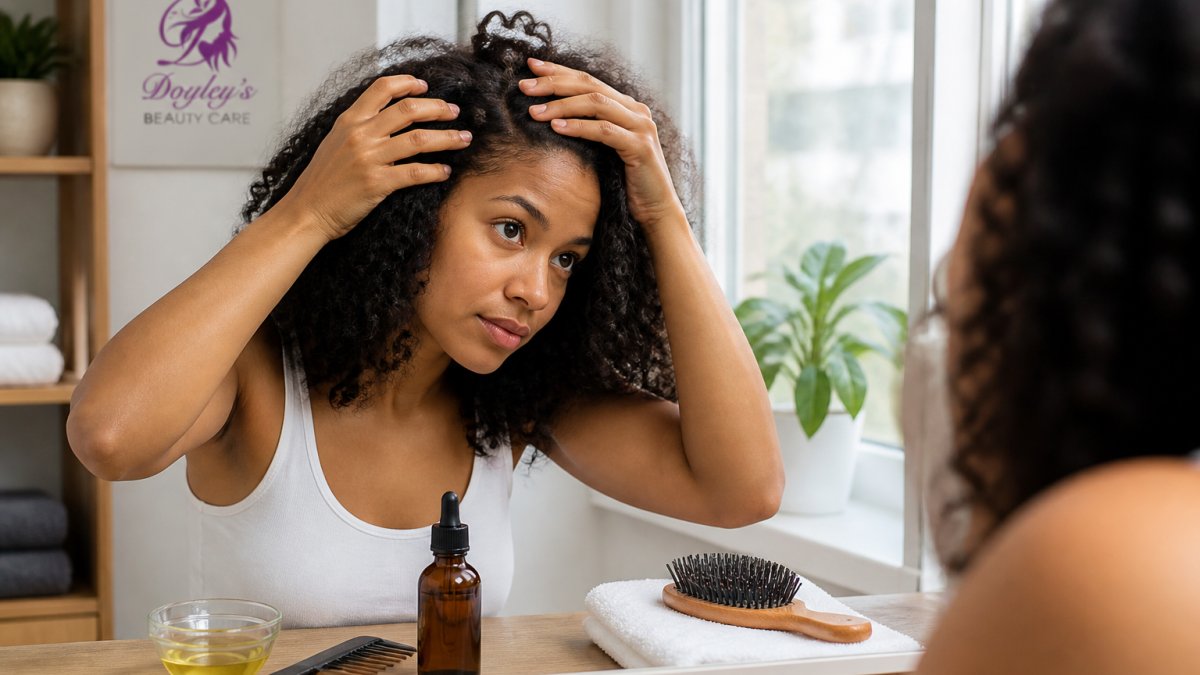
Here's the order that works:
- Start on wash day with clean, damp hair
- Apply a water-based leave-in first so moisture has somewhere to go
- Warm a few drops of oil between your palms
- Press it into the scalp and smooth it over the ends
- Skip the mid-lengths if your hair is fine
Patch Test and Strand Test
Before you commit to a full application, do a patch test. Apply a small amount of oil behind your ear or on your inner wrist and wait 24 hours. If you notice itching, redness, or burning, stop and don't apply it to your scalp. A strand test on a shed piece of hair shows you how the oil coats your texture before it touches your head.
For the strand test, drop a clean shed strand into a glass of room-temperature water and watch for a few minutes. Hair that floats near the top is likely low porosity; hair that sinks quickly is usually higher porosity. Then apply a drop of oil to a separate shed strand and observe whether it coats evenly or sits in a greasy film. If the oil beads on the surface, use less next time or dilute it with a lighter carrier oil.
How Much to Use and How Often
Less is more here. For low-porosity hair, start with a few drops for the scalp and a few more for the ends. Once or twice a week is plenty for most people. If your hair feels weighed down or greasy the next morning, you used too much. Cut back before you cut the product out.
Use case matters as much as amount. For scalp use, a few drops massaged in before washing helps condition the scalp without coating the lengths. For pre-shampoo treatments, apply to damp hair 30 minutes to two hours before cleansing. For sealing, use a few drops on damp ends after leave-in. Avoid applying heavy oil to dry mid-lengths, where it tends to sit and attract lint.
Jamaican Black Castor Oil Leave-In Time: How Long Is Enough?
For low-porosity hair, 30 minutes to a couple of hours is usually enough for a pre-shampoo treatment. Leaving Jamaican black castor oil in overnight is common, but it isn't necessary, and it raises the risk of buildup and transfer to your pillow.

Think of leave-in time as a sliding scale:
| Situation | Suggested Time | Why |
|---|---|---|
| Quick scalp treatment | 30 minutes | Light coating, easy to rinse |
| Pre-shampoo deep treat | 1-2 hours | Time to soften and condition |
| Overnight (occasional) | 6-8 hours | Only if hair isn't prone to buildup |
| Daily sealing | A few drops, no rinse | Seals moisture after styling |
If your hair feels coated or stiff after rinsing, shorten the next session. Low-porosity hair tells you quickly when it has had enough.
Best Oils for Low-Porosity Hair (and Which to Skip)
Lightweight oils are the better match for low-porosity hair because they coat without smothering. Heavier oils can work, but they need careful dosing. The difference comes down to molecular size and how easily each oil spreads across a tightly layered cuticle. Thin oils glide and distribute with a few drops; thick oils stay where they land and can seal the surface before moisture has a chance to enter.
Oils that tend to work well:
- Jojoba oil, close to the scalp's own sebum
- Grapeseed oil, thin and fast-spreading
- Sweet almond oil, light and easy to distribute
- Argan oil, a few drops go a long way
Oils to use sparingly:
- Castor oil, including black castor oil, rich and thick
- Coconut oil, can coat low-porosity strands heavily
- Olive oil, heavy and best kept to the ends
- Shea butter, better for very dry ends than the scalp
This doesn't mean castor oil is off the table. It means you treat it as a concentrated sealing step, not an all-over moisturizer.
Hair type and climate change the picture. Fine strands feel buildup faster than coarse strands, so start with fewer drops. Tight curl patterns benefit from oil applied in small sections, while looser patterns may only need it on the ends. In humid weather, heavy oils can attract moisture from the air and leave hair feeling tacky; in dry indoor heat, a slightly richer seal may help. Styling habits matter too: if you use gel or cream stylers, apply oil after they dry so it seals the style rather than diluting it.
A Low-Porosity Hair Moisturizing Routine That Works
A low-porosity routine is built around water first, then light layers, then a seal. Here's how we'd structure a wash day:
- Cleanse with a clarifying shampoo every few weeks to clear buildup
- Deep condition with gentle heat to help the cuticle open
- Apply leave-in to damp hair while it's still wet
- Seal with a small amount of oil on the ends and scalp
- Style and let hair air-dry or use low heat
Between wash days, refresh with water and a light leave-in rather than more oil. Our Doyley's Haitian Black Castor Oil Mega Moisture Leave-In Conditioner & Detangler is built to hydrate and detangle before you seal, which fits this order well. For the sealing step, a small amount of our Doyley's Haitian Black Castor Oil pressed into damp ends does the job without weighing hair down.
Warm water and steam help low-porosity hair absorb moisture. A warm towel over a deep conditioner for a few minutes is a simple way to use that.
Black Castor Oil vs. Jamaican Black Castor Oil
The two names get used interchangeably, but they aren't identical. Black castor oil is castor oil that has been roasted and sometimes ash-treated, giving it a darker color and a stronger, smokier scent. Jamaican black castor oil refers to the style of production most associated with Jamaica, where beans are roasted and ground before pressing.
In practice, both are rich, thick oils high in ricinoleic acid, and both behave the same way on low-porosity hair: they seal well and need a light hand. Our Haitian black castor oil is pressed from castor beans indigenous to Haiti, giving you a rich, potent oil for the same sealing role. If you want hold and shine in a styled look, our Doyley's Haitian Black Castor Oil Pomade coats the hair shaft to lock in moisture and reduce frizz.
On growth claims, stay realistic. Castor oil is a cosmetic oil. It can support a healthy-looking scalp and reduce breakage, which helps with length retention over time. Anyone with sudden thinning or scalp irritation should see a doctor.
Low-porosity hair asks for patience and a light touch, and castor oil rewards both when you use it as a sealer rather than a cure-all. If you've been layering heavy oil onto dry hair and seeing buildup, the fix is usually method, not a new bottle. At Doyley's Beauty Care, we make authentic Haitian black castor oil products designed to nourish, strengthen, and support healthy-looking hair and scalp. Start with our 4oz Haitian Black Castor Oil, apply a few drops to damp ends after your leave-in, and see how your hair responds over a few weeks. Add it to your routine and let your hair tell you what it needs.
Frequently Asked Questions
Can black castor oil weigh down low-porosity hair?
It can if you use too much. Black castor oil is thick and rich, and low-porosity hair has a tightly layered cuticle that resists absorption, so excess oil sits on the surface as a greasy coating. Start with a few drops warmed between your palms, apply to damp hair, and focus on the scalp and ends rather than the mid-lengths. If your hair feels tacky or limp after styling, use less next time or dilute the oil with a lighter carrier oil.
How often should you use black castor oil on low-porosity hair?
Once or twice a week is a sensible starting point for most people. Low-porosity hair holds onto product, so daily application tends to build up faster than it benefits the hair. Use it as a pre-shampoo treatment or a scalp oil on wash day, then assess how your hair feels after two weeks. If you notice greasy residue or dullness, space applications further apart and add a clarifying shampoo to your routine every few weeks.
Should you apply black castor oil to wet or dry hair?
Damp hair is usually the better choice. Water helps carry moisture into the hair shaft, and applying oil over slightly damp hair helps seal that moisture in rather than coating dry strands. For a pre-shampoo treatment, dry hair is fine because you will wash it out. For leave-in sealing, mist your hair with water first, then smooth a small amount of oil over the ends and any areas that feel rough.
How long should you leave Jamaican black castor oil in your hair?
For a pre-shampoo treatment, 30 minutes to an hour is enough for most low-porosity hair, and a warm towel or shower cap can help the oil spread more evenly. Leaving it on overnight is optional, but use a small amount and protect your pillowcase. For leave-in use, a few drops worked through damp ends do not need to be rinsed out. If your scalp feels itchy or congested after a treatment, wash it out sooner next time.