

Castor Oil for Brow Growth: A Complete Routine Guide
Table of Contents
- Why Castor Oil Works for Eyebrow Health
- Does Castor Oil Make Eyebrows Grow
- How to Apply Castor Oil to Eyebrows
- How Long Does Castor Oil Take to Work on Eyebrows
- Castor Oil for Eyebrows Side Effects and Safety
- Building Your Brow Growth Routine with Castor Oil
- Frequently Asked Questions
Last Updated: October 17, 2026
Why Castor Oil Works for Eyebrow Health
Castor oil has become a popular choice for people interested in castor oil brow growth and supporting healthier-looking brows. At Doyley's Beauty Care, we understand why: the oil contains ricinoleic acid and omega-6 fatty acids that nourish and condition hair.

Your eyebrows face daily challenges, environmental stress, makeup removal, and styling all affect how they look. A nourishing oil helps maintain their health and appearance.
Castor oil penetrates into the skin and hair, reaching the roots of your brow hairs rather than just coating the surface. Its moisturizing properties help combat dryness and support healthier-looking skin around the brow area.
Castor oil's conditioning benefits suit eyebrow maintenance well. Many people find regular application helps brows look more defined over time, the key is consistency and proper technique.
Does Castor Oil Make Eyebrows Grow
The question of whether castor oil for brow growth actually works deserves a straightforward answer: castor oil conditions and nourishes brow hairs, which can help them look healthier and fuller. Still, set realistic expectations about what it can and cannot do.

Castor oil does not change the genetic factors that determine brow shape or density. What it does is support the health of the hairs you have: better-conditioned hairs are less likely to break, so brows can appear more defined.
Think of it this way: castor oil is a maintenance tool, not a growth formula. Your brows will not suddenly transform into something completely different. Instead, you may notice:
- Reduced breakage of fine brow hairs
- A shinier, healthier appearance
- Brows that hold their shape better
- Less dryness around the brow area
Anecdotal reports from people using castor oil on eyebrows regularly suggest consistent application supports better-looking brows, some notice a fuller appearance after several weeks, others improved texture and shine.
How to Apply Castor Oil to Eyebrows
Most guides say to "apply a small amount with a spoolie" and stop there, leaving the practical questions unanswered. Here is a precise routine you can actually follow.
What You Need
- A clean spoolie brush or a fine-tipped brow brush
- A small dish or the back of your hand for dispensing
- A clean tissue
- Your Doyley's Beauty Care Haitian Black Castor Oil
- Mild cleanser for morning removal
Step-by-Step Application
Step 1: Start with a clean, dry brow area. Cleanse your face and pat the brow area completely dry, water dilutes the oil and can make it migrate.
Step 2: Dispense a rice-grain amount. A rice-grain-sized amount, roughly one drop, is enough for both brows.
Step 3: Load the spoolie lightly. Dip the spoolie into the oil and wipe off any excess on the rim of the dish. The brush should look coated, not dripping.
Step 5: Press, don't pool. Use a clean fingertip to gently press the oil into the brow area, a thin, even film, not a visible layer.
Step 6: Keep it away from the lash line and waterline. Stop application at the brow bone. Do not extend the oil down toward the eyelids or the waterline.
Step 7: Leave on overnight, remove in the morning. Sleep with the oil on, then cleanse gently in the morning with your regular face wash and lukewarm water. Avoid rubbing vigorously, pat and rinse.
Applicator Hygiene
The spoolie is the part most people neglect. Wash it with mild soap and warm water once a week, and let it air-dry fully before the next use. Never share a spoolie, and replace it every few months. A dirty brush near the eye area is a preventable source of irritation.
How Much and How Often
There is no evidence-based "dose" for castor oil on brows. A practical starting point most people tolerate well is a rice-grain amount per application, three to five nights per week. If skin feels dry or tight the next morning, reduce frequency; if comfortable, build toward nightly use.
What to Avoid
- Do not apply to broken, irritated, or freshly waxed skin
- Do not layer castor oil over an active breakout near the brow
- Do not use a heavy hand, more oil does not mean better conditioning, and excess can clog pores and contribute to milia
- Do not apply right before a workout or in a hot environment where the oil can run
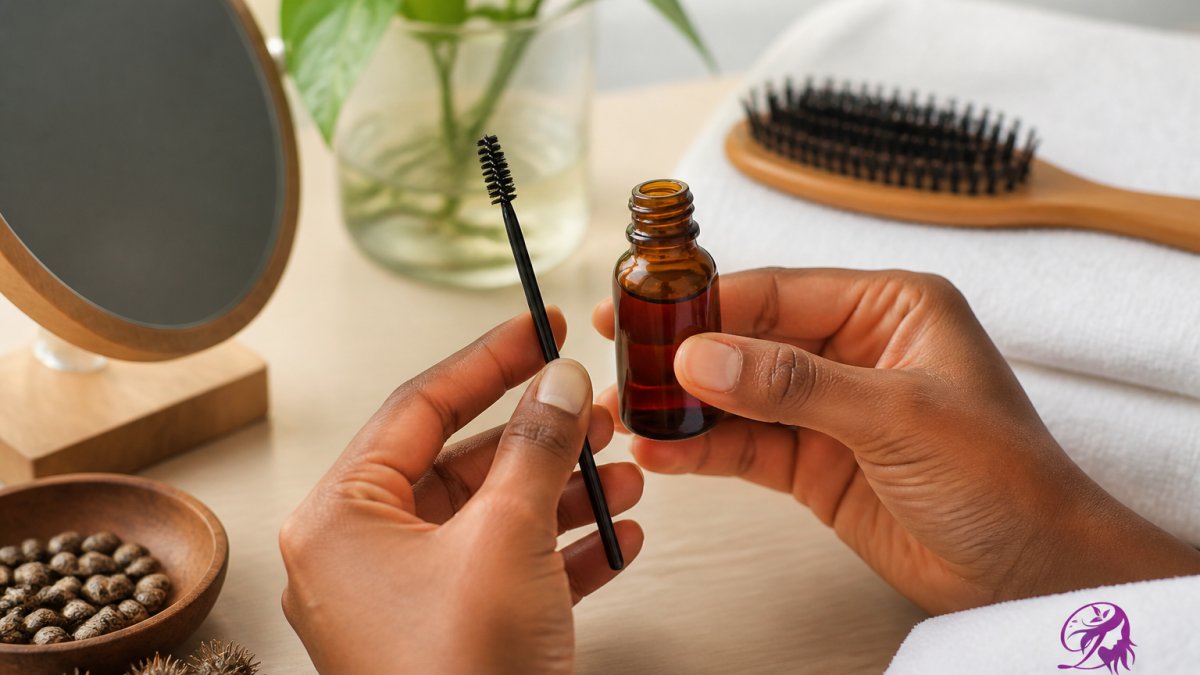
If you wear contacts, insert them before application or remove them first, and keep the oil well away from the lens. If you have sensitive skin or a history of eye irritation, patch test first (see the safety section below).
How Long Does Castor Oil Take to Work on Eyebrows
"How long until I see results" is the question most brow-oil articles answer vaguely. The honest answer depends on what you mean by "work", conditioning and actual hair growth are different outcomes with different timelines.
What "Working" Actually Means
Castor oil is a conditioning oil. It coats and moisturizes the hair shaft and the skin beneath, which can make existing brow hairs look smoother, shinier, and less prone to breakage, a cosmetic improvement, not proof of new hair growth. No well-controlled clinical trial has shown that castor oil grows new eyebrow hair, so treat any timeline as anecdotal.
With that framing, here is what people commonly report:
- 1-2 weeks: Brows feel softer and look less dry; makeup may sit more smoothly on the brow area
- 4-8 weeks: Some people notice improved shine, less flaking around the brow, and hairs that seem to hold their shape better
- 8-12 weeks: Anecdotal reports of brows looking fuller or more defined, but this is typically the appearance of better-conditioned existing hairs, not new growth
Why the Timeline Varies
- Starting condition: Very dry or damaged brows may show cosmetic improvement faster; sparse brows from overplucking or genetics will not change shape from oil alone
- Consistency: Three to five applications per week is a common routine; sporadic use produces sporadic results
- Hair type: Fine brow hairs may respond differently than coarse ones
- Underlying cause: If thinning is due to a skin condition, medication, thyroid issue, or other health factor, an oil will not address it, and that is a reason to see a clinician, not to apply more oil
How to Measure Results Objectively
Because brow changes are gradual, memory is unreliable. Take a clear, well-lit photo of your bare brows (no makeup, same lighting, same angle) on day one, repeat it every four weeks, and journal any dryness, flaking, shedding, redness, or bumps. Compare photos side by side rather than relying on impression, this gives you a real record and helps you spot irritation early.
When to Stop
Set stopping criteria before you start, so you are not applying oil indefinitely out of habit:
- Stop immediately if you notice redness, swelling, itching, or small bumps (milia) around the brow, these are signs of irritation or a reaction
- Reassess at 12 weeks if you see no cosmetic improvement in softness or appearance; there is little reason to continue a routine that is not delivering
- See a clinician if you notice patchy loss, sudden thinning, scaling, or skin changes, these can point to causes that need medical attention rather than a topical oil
Realistic Expectations
A reasonable goal is healthier-looking, better-conditioned brows, not a guaranteed change in density or shape. Expect a conditioning routine with gradual cosmetic benefits, and you can judge honestly whether it is worth continuing; expect new growth, and you may be disappointed and miss a treatable cause of thinning.
Castor Oil for Eyebrows Side Effects and Safety
Using castor oil near your eyes requires care and attention. The eye area is sensitive, and proper precautions help prevent irritation.
Possible side effects include:
- Mild redness or irritation if the oil gets directly in your eye
- Allergic reaction in people sensitive to castor oil
- Temporary greasiness if too much oil is applied
- Milia (small white bumps) if heavy oils clog pores around the eyes
How to minimize risk:
Always patch test before regular use: apply a small amount to the inside of your wrist or behind your ear and wait 24 hours. If your skin reacts, do not use the oil on your brows.
Keep the oil from dripping into your eyes; if it does, flush gently with cool water. Avoid applying oil too close to the waterline.
If you have very sensitive skin or a history of eye irritation, consult a dermatologist before using castor oil on your brows. Some people with certain skin conditions should avoid it.
Start with the smallest amount possible, you can always add more in future applications. Less is more near your eyes.
Building Your Brow Growth Routine with Castor Oil
A sustainable routine helps you stick with castor oil brow growth long enough to see results. Consistency matters more than perfection.
The basic routine:
- Apply castor oil to clean, dry brows 3 to 5 times per week
- Use a small amount applied with a clean spoolie
- Leave the oil on overnight or for at least 2 hours
- Wash gently in the morning with your regular cleanser
Pairing with other products:
You can use castor oil alongside your regular skincare routine. Apply it after cleansing and before any other products. If you use a brow serum or other treatment, space them out or alternate days to avoid overloading the area.
Our Doyley's Beauty Care Haitian Black Castor Oil comes in convenient sizes perfect for brow care. The 4oz bottle is ideal for testing and establishing your routine, while the 8oz size works well if you're using castor oil for multiple purposes.
Making it a habit:
Link your brow routine to an existing habit, apply the oil right after brushing your teeth at night, or as part of your evening skincare ritual.
Adjusting your routine:
If your brows feel too oily in the morning, reduce the amount of oil; if they feel dry, increase frequency to 4 or 5 times per week. Everyone's skin is different, so personalize based on what works for you.
Supporting healthy-looking brows takes patience and the right approach. Castor oil offers a natural way to nourish and condition your brow hairs, helping them look more defined over time.
Frequently Asked Questions
Can I put castor oil on my eyebrows?
Yes, you can safely apply castor oil to your eyebrows as a topical treatment. Use a clean spoolie or cotton swab to apply a small amount. Since the area is close to your eyes, perform a patch test first on a less sensitive area of skin to ensure you don't experience irritation. If you have sensitive skin or a history of eye irritation, consult with a dermatologist before use.
Does castor oil make eyebrows grow thicker?
Castor oil can support healthier-looking brows through its conditioning and nourishing properties. Rich in ricinoleic acid and omega-6 fatty acids, it helps strengthen brow hairs and may reduce breakage, which can help brows appear healthier and more defined over time. However, results depend on consistent application and individual factors like genetics and overall brow health.
How long does it take to see results from castor oil on eyebrows?
Most people notice improvements in brow appearance and texture within 4 to 12 weeks of consistent daily or nightly application. Hair growth cycles vary by individual, so patience is important. Some may see conditioning benefits and reduced breakage sooner, while more defined-looking brows typically develop over several months of regular use.
What are the downsides of using castor oil on eyebrows?
Potential downsides include skin sensitivity or irritation near the eyes, allergic reactions in some individuals, and the risk of the oil getting into your eyes if not applied carefully. Some people may experience temporary itching or redness. Always patch test first, avoid getting oil directly in your eyes, and discontinue use if you experience persistent irritation.