

How to Tell if Castor Oil Is Authentic
Table of Contents
- Understanding Castor Oil Grades and Quality Standards
- Castor Oil Color and Smell: What Authentic Oil Should Look and Smell Like
- Cold-Pressed Castor Oil vs Organic Castor Oil: Key Differences
- Reading the Ingredient Label: What Pure Castor Oil Should Contain
- Castor Oil Purity Test: How to Verify Authenticity at Home and Beyond
- Red Flags: Spotting Adulteration, Substitution, and Misleading Labels
- Packaging, Storage, and Signs of Degradation
- Choosing Authentic Castor Oil: Your Verification Checklist
- Frequently Asked Questions
Last Updated: October 10, 2026
Understanding Castor Oil Grades and Quality Standards
When shopping for castor oil, how to tell if castor oil is authentic depends on understanding the standards and grades that govern the product.
Castor oil is classified into several distinct grades based on intended use, processing method, and purity level. At Doyley's Beauty Care, we prioritize sourcing authentic Haitian Black Castor Oil that meets rigorous quality benchmarks, ensuring you receive the benefits you expect.

USP, NF, and BP Standards Explained
The United States Pharmacopeia (USP), National Formulary (NF), and British Pharmacopoeia (BP) establish rigorous testing protocols that verify purity, composition, and safety.
USP certification means the castor oil has been tested and verified to meet strict standards for identity, strength, quality, and purity.
NF standards operate similarly, often working in conjunction with USP standards.
Look for these certifications on the label as assurance of independent verification.
Pharmaceutical, Cosmetic, Food, and Industrial Grades
Castor oil comes in four primary grades with different purity levels and intended uses.
Pharmaceutical-grade castor oil is the purest and most highly regulated, meeting USP or NF standards for medicinal use and sensitive applications. Cosmetic-grade castor oil is refined for topical beauty and personal care use. Food-grade castor oil is safe for culinary use. Industrial-grade castor oil is the least refined and unsuitable for skin or hair, never purchase it for beauty use.
Confirm the product is at least cosmetic-grade, ideally pharmaceutical-grade for sensitive applications.
Castor Oil Color and Smell: What Authentic Oil Should Look and Smell Like
Authentic castor oil has distinctive visual and olfactory characteristics that provide clues to authenticity, though appearance and scent alone cannot definitively prove it.
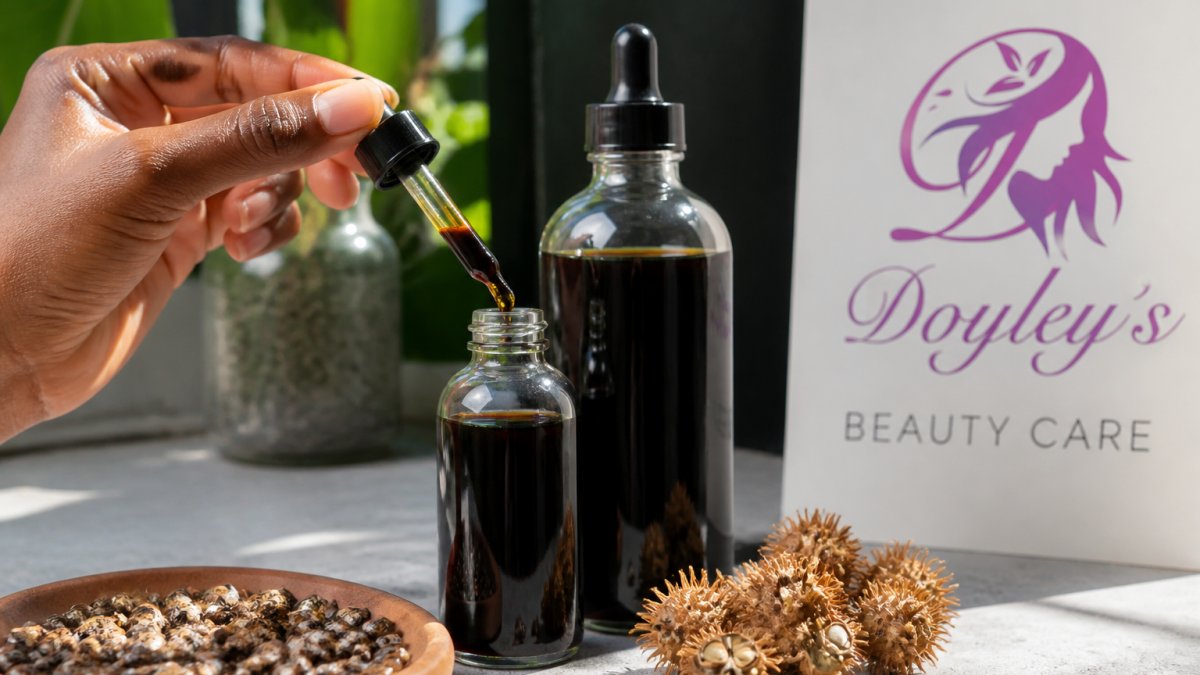
Genuine castor oil ranges from pale yellow to deep amber depending on extraction method and origin. Haitian Black Castor Oil, which we source at Doyley's Beauty Care, has a distinctly dark brown or black appearance due to traditional processing that preserves natural compounds.
Oil that appears murky, cloudy, or has visible sediment may indicate contamination or improper storage.
Authentic castor oil has a characteristic earthy, slightly smoky, or nutty odor from the castor bean itself.
Red flags for scent:
- Rancid or musty smell (indicates oxidation or age)
- Chemical or synthetic odor (suggests additives or poor processing)
- Complete lack of scent (unusual for genuine oil)
- Overly perfumed aroma (often indicates fragrance additives masking lower quality)
While color and smell provide useful clues, they're not foolproof. Always pair sensory evaluation with label verification and certification checks.
Cold-Pressed Castor Oil vs Organic Castor Oil: Key Differences
These two terms describe different aspects of castor oil quality, and understanding the distinction helps you make informed choices about what you're buying.
Cold-pressed castor oil uses mechanical pressure without heat to extract oil, preserving heat-sensitive nutrients and bioactive compounds.
Organic castor oil refers to how beans were grown without synthetic pesticides, herbicides, or fertilizers. Organic certification verifies agricultural practices, not extraction method.
For hair and scalp health, the most important factor is purity and proper sourcing, not extraction method alone.
Reading the Ingredient Label: What Pure Castor Oil Should Contain
Pure castor oil should list exactly one ingredient: castor oil (or Ricinus communis, its botanical name). If the label lists multiple ingredients, it's a blend or formulated product, not pure castor oil.
What to look for on the label:
- Single ingredient: Castor oil or Ricinus communis
- Origin statement: "Haitian," "Jamaican," or specific country of origin
- Processing method: "Cold-pressed," "expeller-pressed," or "traditionally processed"
- Certifications: USP, NF, organic, or other quality marks
- Extraction notes: "Hexane-free" indicates no chemical solvents were used
Red flags on labels:
- Vague ingredient lists ("natural oils," "botanical blend")
- No country of origin specified
- Claims of "pure" with multiple ingredients listed
- Missing batch or lot numbers (suggests lack of traceability)
- Illegible or poorly printed labels (often indicates counterfeit)
In cosmetic products, ingredients are listed by weight. At Doyley's Beauty Care, we source authentic Haitian Black Castor Oil rich in ricinoleic acid and omega-6 fatty acids, with clear labeling reflecting exactly what's in the bottle.
Castor Oil Purity Test: How to Verify Authenticity at Home and Beyond
Several at-home tests circulate online claiming to verify castor oil authenticity. None can definitively prove purity without laboratory analysis.
At-Home Checks and Their Limitations
The water test: Castor oil is naturally hydrophobic, so this test doesn't distinguish pure from adulterated versions.
The viscosity test: Viscosity depends on temperature and processing method and is subjective.
The burn test: This is dangerous, imprecise, and tells you little about purity.
The scent and color assessment: These provide clues but aren't definitive; dyes and additives can manipulate them.
At-home tests cannot reliably distinguish pure castor oil from adulterated versions.
Verifying Certifications and Laboratory Testing
Real verification requires documentation. Here's how to actually confirm authenticity:
Request a Certificate of Analysis (CoA). Reputable suppliers should provide a CoA showing laboratory test results for the specific batch, verifying purity, fatty acid composition, and absence of contaminants.
Check for third-party testing. Look for statements like "third-party tested" or "independently verified."
Verify certifications directly. Confirm USP, NF, or organic claims through the certifying organizations' websites.
Ask the supplier. Legitimate companies welcome questions about sourcing and testing. At Doyley's Beauty Care, we're transparent about our sourcing from Haiti and quality standards.
Check batch numbers and traceability. Quality products include batch or lot numbers for production date and source verification.
Red Flags: Spotting Adulteration, Substitution, and Misleading Labels
Adulteration, mixing castor oil with cheaper oils or additives, is a real problem.
Misleading label claims:
- "100% pure" with a multi-ingredient list
- "Natural" without certification
- "Haitian Black Castor Oil" from unclear sources
- Claims of guaranteed hair growth or medical benefits
- Vague origins like "imported" without specifics
Pricing red flags:
If castor oil is significantly cheaper than comparable products from established suppliers, question why. Authentic Haitian Black Castor Oil requires proper sourcing and quality control, both have costs.
Seller credibility:
Purchase from established retailers, direct manufacturers, or verified distributors. Unknown sellers on unvetted platforms carry higher risk. Check reviews, but remember that reviews can be fabricated.
Packaging, Storage, and Signs of Degradation
Even authentic castor oil can degrade if stored improperly. Understanding how to identify degraded oil and maintain quality is part of ensuring authenticity over time.
Proper packaging protects castor oil from light and air exposure. Dark glass bottles are ideal, they block UV light that can degrade the oil. Plastic bottles are acceptable but inferior to glass.
Look for:
- Dark or opaque glass bottles
- Airtight seals or caps
- Labels indicating light protection
- Batch numbers and manufacturing dates
Signs of degradation:
- Rancid smell: A sharp, unpleasant odor indicates oxidation. Don't use degraded oil.
- Cloudy appearance: Cloudiness can indicate contamination, mold, or separation. Authentic castor oil should be clear.
- Separation: If oil and other components visibly separate, the product may be compromised.
- Discoloration: Darkening beyond the oil's natural color, or unexpected lightening, suggests oxidation or contamination.
- Crystallization: Small crystals forming in the bottle indicate moisture or improper storage.
Storage best practices:
- Keep castor oil in a cool, dark place (ideally 60-75°F)
- Avoid direct sunlight and heat sources
- Store away from moisture
- Keep the cap tightly sealed
- Don't store in the bathroom (humidity fluctuates)
- Check expiration dates; most castor oils remain stable for 2-3 years if stored properly
Once opened, castor oil gradually oxidizes. Use within 6-12 months for best quality, though it may remain usable longer if stored well.
Choosing Authentic Castor Oil: Your Verification Checklist
When you're ready to purchase castor oil, use this systematic approach to evaluate authenticity and quality.
| Verification Step | What to Check | What This Tells You |
|---|---|---|
| Label reading | Single ingredient; origin stated; certifications visible | Basic transparency and claims |
| Certification verification | USP, NF, or organic marks confirmed independently | Third-party quality assurance |
| Seller credibility | Established retailer; verifiable contact info; customer reviews | Legitimacy and accountability |
| Documentation request | Certificate of Analysis available; batch traceability confirmed | Laboratory-verified purity |
| Price comparison | Consistent with comparable authentic products | Realistic cost expectations |
| Packaging inspection | Dark glass bottle; airtight seal; clear labeling | Proper protection and storage |
| Sensory evaluation | Color appropriate to type; characteristic earthy scent | Initial quality indicators |
Before purchasing:
- Identify the specific type you need (Haitian, Jamaican, cold-pressed, organic, etc.)
- Research the supplier's reputation and sourcing practices
- Request documentation of certifications and testing
- Compare pricing across reputable sellers
- Check return policies in case the product doesn't meet expectations
After purchasing:
- Inspect the bottle immediately upon arrival
- Verify the seal is intact and undamaged
- Store properly from day one
- Use within the recommended timeframe
- Monitor for signs of degradation
At Doyley's Beauty Care, we source authentic Haitian Black Castor Oil from the finest castor beans indigenous to Haiti.
Choosing authentic castor oil requires more than checking a label or relying on appearance. It demands understanding quality standards, verifying certifications, and purchasing from suppliers committed to transparency.
Frequently Asked Questions
What should the ingredient label on pure castor oil say?
Authentic castor oil should list only one ingredient: castor oil (Ricinus communis seed oil). If the label shows additional ingredients like mineral oil, silicones, or synthetic fragrances, it has been adulterated. Check for certifications like USP or NF, which indicate the oil meets pharmaceutical or cosmetic purity standards. Our Doyley's Haitian Black Castor Oil contains only pure castor oil with no additives, making it a reliable choice for those seeking genuine, unblended oil.
How can you tell if castor oil is pure?
Pure castor oil has a distinctive dark color (ranging from pale yellow to deep brown or black depending on processing), a characteristic earthy or smoky scent, and a thick, viscous texture. Check the label for a single-ingredient listing and third-party certifications. Verify the source and processing method. At-home tests like freezing or water tests have limitations and cannot definitively prove purity, so certification and label verification are more reliable.
What is the difference between cold-pressed castor oil and organic castor oil?
Cold-pressed castor oil is extracted using mechanical pressure without heat or chemical solvents, preserving the oil's natural properties and nutrients. Organic castor oil comes from castor beans grown without synthetic pesticides or fertilizers and certified by regulatory bodies. An oil can be both cold-pressed and organic, or just one. Cold-pressed focuses on extraction method, while organic focuses on sourcing. Both indicate higher quality and purity compared to oils extracted with hexane or grown conventionally. Understanding this distinction helps you choose oil that matches your preferences for processing and sourcing standards.
Does authentic castor oil have a particular color or smell?
Yes. Authentic castor oil ranges in color from pale yellow to deep golden, amber, or dark brown, depending on the source and processing method. Haitian black castor oil is traditionally darker due to traditional ash-based processing. The scent is distinctly earthy, smoky, or slightly pungent, not fruity, floral, or artificially scented. If castor oil smells like perfume or has no scent at all, it may be adulterated or counterfeit. While color and smell alone cannot guarantee authenticity, they are important sensory clues that, combined with label verification and certification checks, help confirm you're purchasing genuine castor oil.
Can you tell whether castor oil is authentic with a home test?
Home tests like freezing point, water droplet, or viscosity checks are popular but have significant limitations. These tests cannot definitively prove authenticity or detect all adulterants, and results can be inconclusive or misleading. The most reliable way to verify authenticity is to check the ingredient label for a single-ingredient listing, confirm third-party certifications (USP, NF, or organic), verify the source and processing method, and purchase from reputable, transparent brands. If you're unsure about a product's authenticity, requesting a certificate of analysis or contacting the manufacturer directly is far more trustworthy than home testing.
What details should you check before buying castor oil?
Before purchasing, verify the source (Haiti, Jamaica, or other known regions), check for third-party certifications like USP, NF, or organic labeling, read the ingredient list to confirm it contains only castor oil, examine the color and scent as sensory clues, and research the brand's transparency about sourcing and processing. Purchase from established retailers or direct from the manufacturer. Doyley's Haitian Black Castor Oil provides clear sourcing information, making verification straightforward and building confidence in your purchase.
How should castor oil be stored after opening?
Store castor oil in a cool, dark place in a tightly sealed glass bottle away from direct sunlight and heat, which can degrade the oil over time. Proper storage helps maintain potency and prevents oxidation. Keep the cap tightly closed after each use. When stored correctly, castor oil has a long shelf life. Signs of degradation include off-putting odors, cloudiness, or separation of the oil, which indicate the product should not be used.